If you’re considering rhinoplasty in Busan, choosing a clinic is only one part of the decision.
You may also be wondering:
What material will be used? How long should I stay in Korea? When can the stitches be removed? How much will surgery cost? And what happens if this is a revision rhinoplasty?
Rhinoplasty is highly individualized because every nose has a different structure, proportion, skin thickness, and surgical history.
At Haneul Plastic Surgery in Busan, the surgical plan is determined after evaluating the patient’s individual nasal anatomy and desired result rather than applying the same surgical method or material to everyone.
Here are the key things international patients should understand before planning rhinoplasty in Korea.
- Rhinoplasty Is Not the Same Surgery for Everyone
- Which Material Is Used for Rhinoplasty?
- What Happens During Rhinoplasty at Haneul?
- How Much Does Rhinoplasty in Korea Cost?
- What Is Recovery Like After Rhinoplasty?
- How Long Should I Stay in Korea After Rhinoplasty?
- Post-Surgery Swelling & Recovery Care at Haneul
- Before & After: Look for a Nose That Fits the Face
- Why Consider Haneul Plastic Surgery in Busan?
- FAQ: Rhinoplasty in Korea for Foreign Patients
Rhinoplasty Is Not the Same Surgery for Everyone
When people talk about a “nose job,” it can sound like one standard procedure.
In reality, rhinoplasty can involve different areas of the nose depending on what needs to be changed.
A patient may want to address:
- A low or flat nasal bridge
- A bulbous or wide nasal tip
- A drooping nasal tip
- A short nose
- A dorsal hump
- Nasal asymmetry
- Overall nose-to-face proportions
- A previous rhinoplasty result
The surgical plan may therefore involve the bridge, tip, cartilage, nasal length, width, or a combination of several areas.
This is also why bringing a reference photo can be useful — but it should be used to communicate the style and direction you prefer, not as a promise that another person’s nose can be reproduced exactly.

Which Material Is Used for Rhinoplasty?
One of the most important things to understand before rhinoplasty is that there is no single material that is best for every patient.
Depending on your existing nasal structure and the changes required, the surgeon may discuss autologous cartilage, an implant, or a combination of materials.
| Material | What It Is | Why It May Be Considered |
|---|---|---|
| Septal Cartilage | Cartilage from inside the nose | May be used when structural support or tip modification is required and suitable septal cartilage is available |
| Ear Cartilage | Cartilage harvested from the ear | Commonly considered when softer cartilage is useful for selected tip or contour adjustments |
| Rib Cartilage | Cartilage harvested from the rib | Can provide a larger amount of cartilage and may be considered when stronger or more extensive structural support is required |
| Artificial Implant | Synthetic material selected for nasal augmentation | May be considered for selected bridge augmentation depending on anatomy and the surgical plan |
More than one material may be used during the same surgery.
The decision should take into account factors such as:
- Existing nasal structure
- Amount and quality of available cartilage
- Desired degree of change
- Bridge versus tip correction
- Previous nasal surgery
- Skin and soft-tissue characteristics
This becomes particularly important in revision rhinoplasty, where cartilage may already have been harvested or the internal anatomy altered by previous surgery.
What Happens During Rhinoplasty at Haneul?
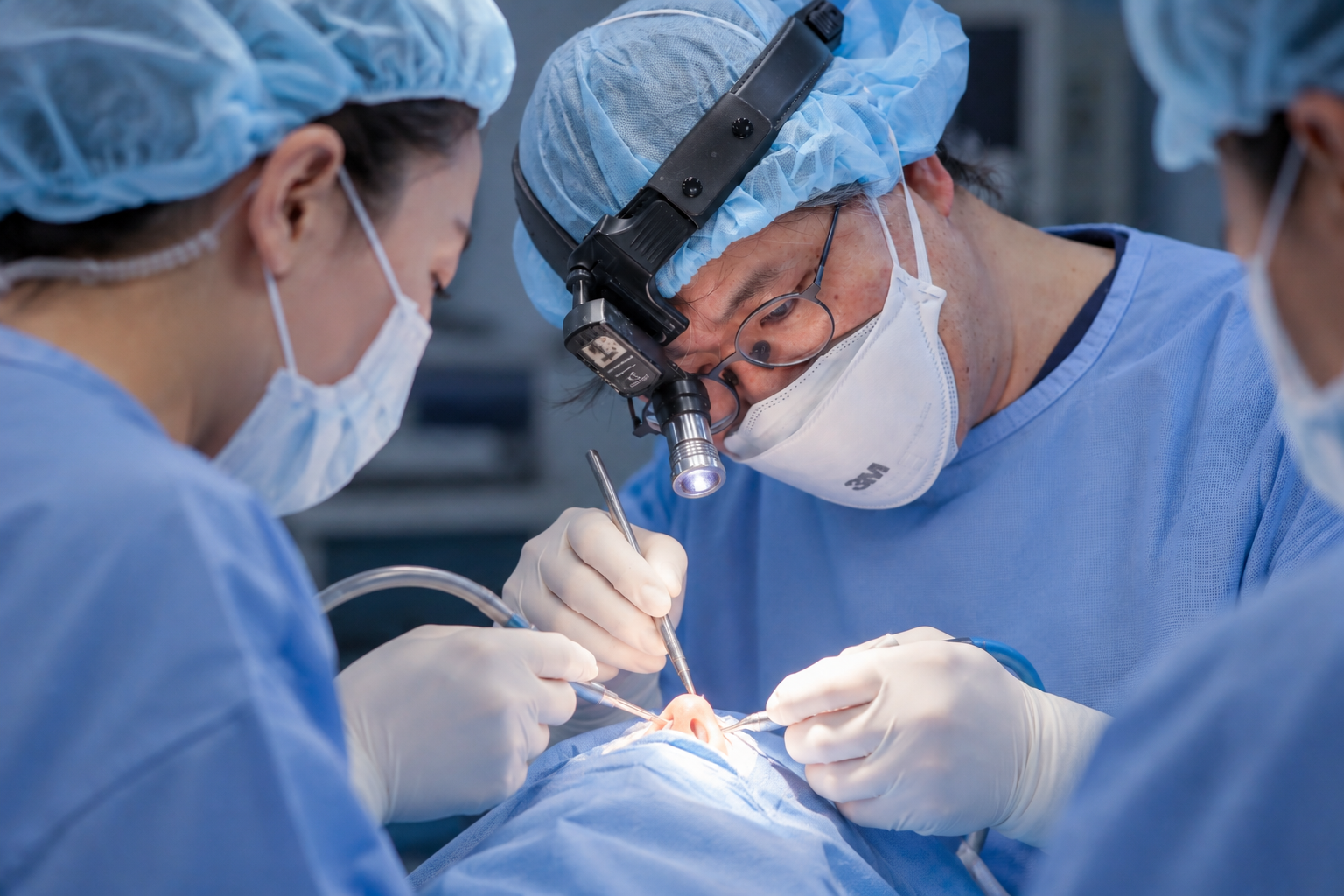
The exact procedure varies according to the surgical plan, but international patients often want to understand the basic logistics before booking their trip.
At Haneul Plastic Surgery, a typical rhinoplasty can be summarized as follows:
| Rhinoplasty at Haneul | |
|---|---|
| Surgery Time | Approximately 1 hour |
| Anesthesia | Sedation anesthesia |
| Stitch Removal | Usually around 7 days after surgery |
| Primary Rhinoplasty Price | Approximately KRW 4–5 million |
| Revision Rhinoplasty Price | Can reach the KRW 10 million range depending on complexity |
| Postoperative Care | Swelling-care package, swelling-management treatment and regenerative laser care |
These are general guidelines rather than guarantees. Surgery time, surgical method, postoperative schedule, and final price can change according to the patient’s anatomy and surgical complexity.
How Much Does Rhinoplasty in Korea Cost?
For many international patients, price is one of the first practical questions.
At Haneul Plastic Surgery, the approximate price range is:
| Surgery | Approximate Price |
|---|---|
| Primary Rhinoplasty | KRW 4–5 million range |
| Revision Rhinoplasty | Can reach KRW 10 million range |
Why can revision surgery cost considerably more?
Revision rhinoplasty can be more complex because the surgeon may need to work with:
- Scar tissue from previous surgery
- Previously altered cartilage
- Existing implants
- Limited remaining septal cartilage
- Structural changes from previous procedures
- More complicated reconstruction requirements
For this reason, a revision case cannot be priced accurately based only on photos or another patient’s surgery.
The final surgical plan and cost should be confirmed after consultation.
What Is Recovery Like After Rhinoplasty?
One of the biggest concerns among foreign patients considering rhinoplasty in Korea is recovery.
Recent patient discussions also frequently focus on pain, swelling, sleeping, eating, everyday activities, and how long to remain in Korea after surgery.
Swelling and bruising are normal parts of early recovery, but the amount and duration vary from patient to patient.
It is also important to distinguish between:
being able to walk around and perform normal activities
and
your nose reaching its final appearance.
These are very different timelines.
Even after the initial swelling improves and stitches or a splint are removed, the nose can continue to change as swelling gradually settles.
Patients should therefore avoid judging their final result too early.
How Long Should I Stay in Korea After Rhinoplasty?
For international patients, travel planning should be part of the surgical plan.
At Haneul, stitches are generally removed around 7 days after surgery, so your Korea itinerary should allow enough time for the appropriate postoperative appointment.
Community discussions among international patients also frequently ask whether one week is sufficient or whether staying closer to two weeks provides more time for follow-up and early recovery.
Rather than booking the shortest possible trip, provide the clinic with your:
- Arrival date
- Preferred surgery date
- Departure date
before finalizing flights and accommodation.
Your recommended stay may differ depending on whether you are having primary or revision rhinoplasty and on your individual postoperative schedule.
Post-Surgery Swelling & Recovery Care at Haneul
Rhinoplasty recovery doesn’t end when the operation is finished.
At Haneul Plastic Surgery, postoperative care can include a swelling-management package, swelling care, and regenerative laser treatment to support the early recovery process.
Follow-up appointments also allow the medical team to monitor early healing and provide postoperative instructions.
Before leaving Korea, make sure you understand:
- How to care for the surgical area
- What activities should temporarily be avoided
- When stitches or other materials are removed
- How to manage swelling
- When you can resume exercise
- What symptoms require medical attention
- How to contact the clinic after returning home
International patients can continue follow-up communication after returning to their home country.
However, remote communication does not replace physical medical assessment when an in-person examination is required.
Before & After : Look for a Nose That Fits the Face
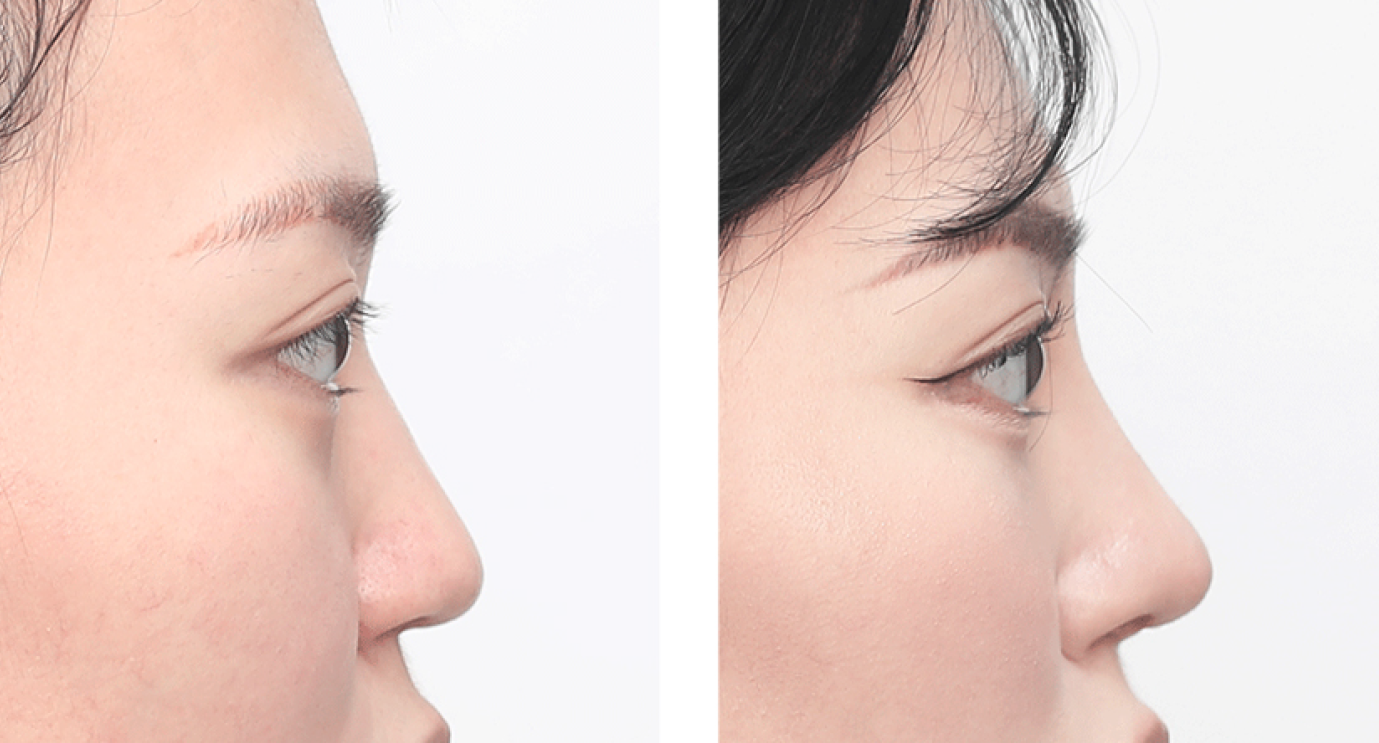
When looking at rhinoplasty before-and-after photos, don’t focus only on how high or small the nose became.
Look at the nose in relation to the whole face.
Consider:
- Bridge height
- Tip projection
- Tip rotation
- Frontal appearance
- Side profile
- Overall facial proportions
- How natural the result looks
- How long after surgery the “after” photo was taken
Community discussions among patients researching rhinoplasty in Korea also frequently emphasize surgeon style and consistency across before-and-after cases, rather than simply choosing a large or well-known clinic.
If your preference is subtle and natural, show examples of subtle and natural noses during consultation.
If you prefer a more defined change, communicate that clearly too.
Why Consider Haneul Plastic Surgery in Busan?
Choosing a rhinoplasty surgeon isn’t simply about finding someone who performs nose surgery.
The surgical plan needs to work with your individual nasal anatomy and overall facial proportions.
At Haneul Plastic Surgery in Busan, the approach focuses on individualized consultation and surgical planning rather than applying the same nose design to every patient.
Individualized Material Selection
Septal cartilage, ear cartilage, rib cartilage, artificial implants, or combinations can be considered depending on the patient’s nasal anatomy and surgical needs.
Primary & Revision Rhinoplasty
Both first-time and revision cases can be evaluated, with revision surgery planned according to previous surgical changes and remaining nasal structures.
Postoperative Recovery Care
Swelling-management care and regenerative laser treatment are available as part of postoperative care.
International Patient Support
Foreign patients can arrange pre-visit consultation and medical interpretation before surgery.
Travel dates can also be considered when planning surgery, postoperative appointments, and stitch removal.
Follow-Up After Returning Home
Communication can continue after the patient returns home, which is particularly important for international surgical patients.
FAQ: Rhinoplasty in Korea for Foreign Patients
How do I choose between septal, ear, and rib cartilage for rhinoplasty?
You don’t need to choose the material yourself before consultation.
Septal, ear, and rib cartilage have different structural characteristics and available quantities. The appropriate material depends on what needs to be changed, your existing anatomy, previous surgery, and how much structural support is required.
Is rib cartilage always necessary for revision rhinoplasty?
No.
Rib cartilage can provide a larger amount of strong autologous cartilage, which can make it useful in some complex or revision cases. However, not every revision requires rib cartilage.
The surgeon needs to assess what cartilage remains available and what reconstruction is required.
Is silicone or an artificial implant safe for rhinoplasty?
Artificial implants are used in selected rhinoplasty cases, particularly when augmentation of the nasal bridge is being considered.
However, no material is appropriate for every patient. The potential benefits, limitations, and risks of an implant versus autologous tissue should be discussed with the surgeon based on your anatomy and surgical goals.
How painful is rhinoplasty recovery?
Pain and discomfort vary considerably between patients.
Recent community discussions show that first-time surgical patients often worry about pain, pressure, swelling, headaches, sleeping, and daily activities during the early recovery period.
Your surgical team should explain expected postoperative symptoms and how discomfort will be managed.
How long should I stay in Korea after rhinoplasty?
There is no single stay length that applies to every patient.
At Haneul, stitch removal is generally planned around 7 days after surgery. Your required stay can vary depending on the operation, postoperative appointments, and whether it is a primary or revision rhinoplasty.
Share your departure date before confirming surgery.
When will my nose look natural after rhinoplasty?
The nose does not reach its final appearance when the stitches or splint are removed.
Early swelling gradually improves, but residual swelling and changes in nasal definition can continue for much longer. The exact healing timeline varies according to the surgery and individual.
How much is rhinoplasty in Busan?
At Haneul Plastic Surgery, primary rhinoplasty is generally in the KRW 4–5 million range.
More complicated revision rhinoplasty can reach the KRW 10 million range, depending on the previous surgery, required materials, and complexity of reconstruction.
The final price is confirmed after consultation.
Can I get an exact rhinoplasty quote through photos before coming to Korea?
Photos can help with an initial consultation and approximate estimate, but they cannot show every aspect of the internal nasal structure.
The surgical plan and final price may therefore change after an in-person examination.
Can I bring a celebrity or reference photo to my rhinoplasty consultation?
Yes. Reference photos can help communicate your preferred style, such as a natural bridge, more defined tip, or particular profile.
However, they should be treated as references rather than exact templates because nasal anatomy and facial proportions differ between individuals.
Planning Rhinoplasty at Haneul Plastic Surgery in Busan?
If you’re considering rhinoplasty in Busan, you don’t need to decide which cartilage, implant, or surgical technique you need before coming to Korea.
Start by explaining what you want to change and what kind of result you prefer.
Before visiting Haneul Plastic Surgery in Busan, international patients can share their photos, previous surgery history, reference images, and Korea travel dates through a pre-visit consultation.
The final surgical plan — including the appropriate material, technique, cost, and postoperative schedule — can then be determined after evaluating your individual nasal anatomy.
The goal isn’t to choose the most popular rhinoplasty technique in Korea. It’s to build a surgical plan that fits your nose and your face.