
Rhinoplasty is not simply about making the nose higher or smaller.
A nose that looks balanced from the side may still appear wide, crooked, or disproportionate from the front. The bridge, nasal tip, length, width, and relationship between the nose and surrounding facial features all need to be considered together.
At Haneul Plastic Surgery in Busan, nose surgery begins with a detailed one-on-one consultation and assessment of the patient’s individual nasal structure.
Rather than applying the same nose shape to every patient, the surgical plan is developed according to the type of nose, underlying structural concerns, facial proportions, and the result the patient hopes to achieve.
- What Is Rhinoplasty?
- Different Types of Noses and Rhinoplasty Concerns
- Who May Consider Nose Surgery?
- How Haneul Plans Nose Surgery in Busan
- Nose Surgery at a Glance
- How Does Haneul Choose the Right Rhinoplasty Approach?
- Nose Surgery Before & After
- Nose Surgery Recovery & Aftercare
- Haneul Nose Surgery Recovery Program
- Why Choose Haneul for Nose Surgery in Busan?
- Nose Surgery FAQ
What Is Rhinoplasty?
Rhinoplasty, commonly called nose surgery or a nose job, is a surgical procedure used to change the shape, proportion, or structure of the nose.
The appropriate surgical plan depends on what is creating the patient’s concern.
For example, a low bridge, prominent hump, short nose, long nose, crooked nose, and wide or bulbous nose do not have the same structural cause and therefore should not automatically be treated in the same way.
At Haneul, the goal of rhinoplasty planning is to identify the individual characteristics of the nose first and then determine which areas require adjustment.
These may include:
- Nasal bridge
- Nasal tip
- Nose length
- Nose width
- Nasal angle
- Columella
- Internal nasal structure
- Overall facial proportions
Understanding the underlying structure is important because changing only one visible feature may not address the primary cause of the patient’s concern.

Different Types of Noses and Rhinoplasty Concerns
There is no single rhinoplasty technique that is appropriate for every nose.
Haneul evaluates different nasal types individually before creating a surgical plan.
Low Nose
A relatively low nasal bridge or tip can make the center of the face appear less defined when viewed in relation to the patient’s other facial features.
Treatment planning may consider both bridge height and nasal tip projection rather than focusing on bridge augmentation alone.
Hump Nose
A dorsal hump can create a visible curve or prominence along the bridge.
In some patients, the hump itself may be prominent, while in others a relatively low area around the upper bridge can make the hump appear more noticeable.
The underlying structure should therefore be evaluated before determining how the bridge should be adjusted.
Short Nose
A short nose may make the nostrils more visible from the front.
The surgical plan depends on the cause of the short appearance and the relationship between the bridge, tip, and overall nose length.
Long or Droopy Nose
A long nose can affect facial proportions, particularly when the nasal tip points downward or the nose appears long relative to the midface.
In some cases, the nasal tip may extend downward enough to visually shorten the area between the nose and upper lip.
Crooked Nose
A crooked nose may appear deviated when viewed from the front.
Because external deviation can be related to the internal structure of the nose, Haneul uses structural assessment when planning surgery for patients with visible nasal asymmetry.
Wide or Bulbous Nose
A wide bridge, broad nasal tip, or thick tissue can make the nose appear wider or less defined.
The appropriate treatment depends on which part of the nose is contributing to the width rather than assuming that every wide nose requires the same correction.
Who May Consider Nose Surgery?
Nose surgery may be considered if you are concerned about:
- A low or wide nasal bridge
- A low or broad nasal tip
- A visible hump along the bridge
- A short nose with noticeable nostril exposure
- A nose that appears disproportionately long
- A downward-pointing or droopy nasal tip
- A visibly crooked nose
- A wide or bulbous nose
- Imbalance between the bridge and nasal tip
- The overall proportion of the nose compared with the rest of the face
Having one of these concerns does not automatically determine which procedure is appropriate.
The surgeon first needs to evaluate the anatomy and identify what is actually contributing to the appearance of the nose.
How Haneul Plans Nose Surgery in Busan
Haneul’s approach to nose surgery in Busan begins with identifying the individual nasal type and underlying structural concerns.
The surgical plan is developed through several steps.
1. One-on-One Consultation
The consultation is used to understand both the patient’s concerns and the facial characteristics that may influence the surgical plan.
Instead of starting with a predetermined nose shape, the surgeon considers:
- Current nose shape
- Bridge height and width
- Nasal tip shape and projection
- Nose length
- Facial proportions
- Existing asymmetry
- Desired changes
- Previous nose procedures, if applicable
Reference photos can help communicate aesthetic preferences, but the final design should be based on the patient’s own anatomy.
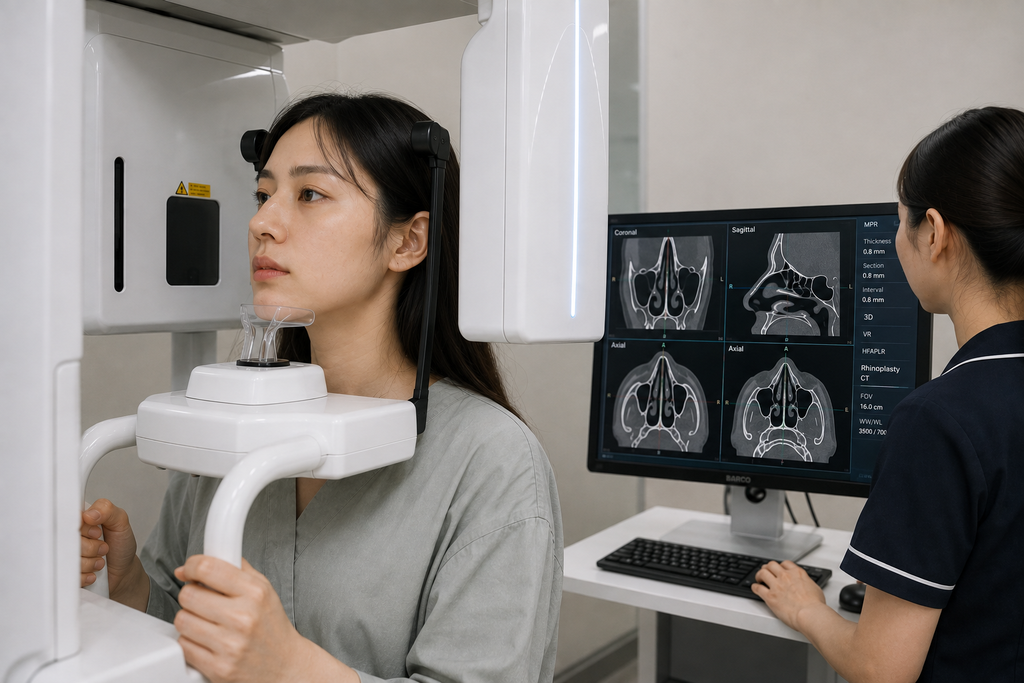
2. 3D-CT Assessment
Haneul uses 3D-CT imaging to evaluate the nasal structure when planning type-specific rhinoplasty.
The scan helps the medical team assess not only the external appearance of the nose but also its internal structure.
This can be particularly relevant when visible concerns such as deviation or asymmetry may have a structural component.
3. Facial Proportion Analysis
The nose is positioned at the center of the face, which means changing its height or projection can also change how surrounding features appear.
Haneul considers the relationship between the nose and other facial landmarks, including:
- Forehead
- Glabella
- Distance between the eyes
- Midface proportions
- Nasal bridge
- Nasal tip
- Columella
- Nasolabial angle
The objective is not simply to create a higher nose, but to plan a nose shape that works with the patient’s overall proportions.
4. Bridge and Nasal Tip Planning
The bridge and tip are evaluated together rather than as completely separate areas.
Depending on the individual anatomy, surgery may involve adjustment of the bridge, nasal tip, or both.
The specific implant, cartilage, or other material used—when required—is selected according to the individual surgical plan.
5. Addressing the Underlying Cause
Two patients who appear to have a similar nose shape may not have the same structural issue.
For example, a visible hump, short nose, or crooked nose can have different anatomical causes.
Haneul therefore plans rhinoplasty according to the underlying structure rather than treating only the most obvious external feature.
Nose Surgery at a Glance
| Surgery Information | Details |
|---|---|
| Surgery Time | Approximately 2 hours |
| Anesthesia | Sedation |
| Hospitalization | Not required |
| Suture Removal | Approximately 7 days after surgery |
| Follow-Up Visits | Approximately 2–3 visits |
| Initial Recovery | Approximately 7 days |
The exact surgical plan, recovery process, and follow-up schedule may vary depending on the type of rhinoplasty and individual healing.
The 7-day recovery period refers to the initial recovery stage, not the time required for the nose to reach its final shape.
Swelling can continue to change after patients return to normal daily activities, and the nasal tip in particular may take longer to settle.
How Does Haneul Choose the Right Rhinoplasty Approach?
The starting point is not:
“Which nose shape is most popular?”
A more useful question is:
“What is creating the current shape of my nose, and what actually needs to be changed?”
At Haneul, the surgical plan may consider:
- Bone structure
- Cartilage structure
- Nasal bridge height
- Nasal tip support and projection
- Skin and soft-tissue characteristics
- Nose length and width
- Existing deviation
- Facial proportions
- Patient preference
The material and surgical technique are then selected according to the individual anatomy and the areas being addressed.
This is why two patients who both want a “higher and more defined nose” may require different procedures.
Nose Surgery Before & After
Before-and-after photos are particularly useful in rhinoplasty because the result should be evaluated from more than one angle.
A nose can look very different from the front, three-quarter view, and side profile.
Haneul’s rhinoplasty cases can help illustrate how surgical planning varies according to the patient’s original nose shape and facial proportions.
[NOSE SURGERY BEFORE & AFTER GALLERY]
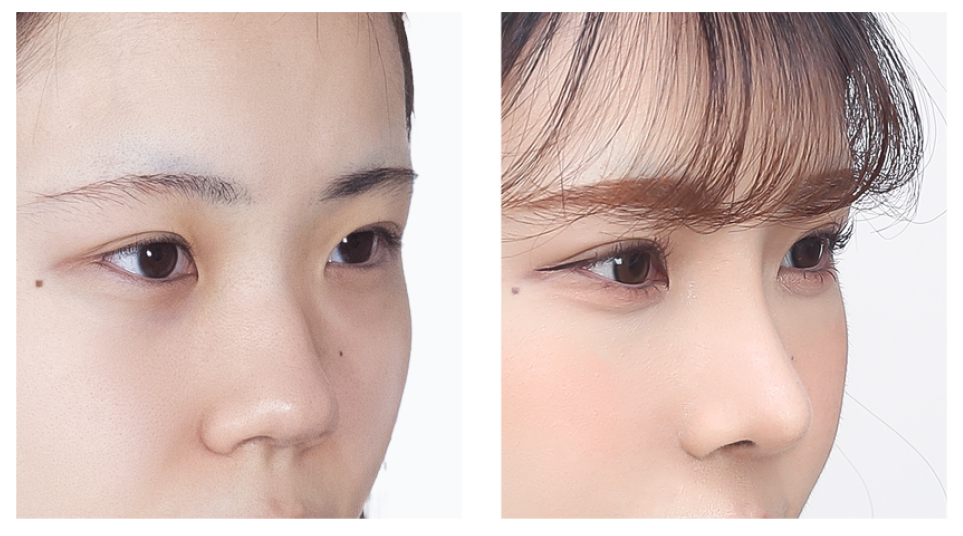
When reviewing rhinoplasty before-and-after photos, consider:
- Front-view symmetry
- Bridge width and line
- Nasal tip shape
- Nose length
- Side-profile balance
- Relationship between the nose and other facial features
It can also be useful to check when the postoperative photo was taken.
A result photographed one month after surgery may look different from the same nose several months later as swelling continues to settle.
Individual results vary, and before-and-after photographs should not be interpreted as a guarantee of the same result for another patient.
Nose Surgery Recovery & Aftercare
Rhinoplasty recovery happens gradually.
At Haneul, the initial recovery period for type-specific nose surgery is approximately 7 days, with suture removal generally planned around the seventh day.
Approximately 2–3 follow-up visits may be required depending on the surgical plan and recovery condition.
During early recovery, patients may experience:
- Swelling
- Bruising
- A feeling of tightness
- Temporary changes in nasal tip definition
- A nose that appears larger or higher than expected because of swelling
The appearance during the first days or weeks should not automatically be interpreted as the final result.
Healing varies between individuals, and different parts of the nose may settle at different rates.
Haneul Nose Surgery Recovery Program
Haneul provides postoperative care designed to support patients through the early recovery period.
| Recovery Care | What It Includes | Purpose |
|---|---|---|
| Postoperative Swelling Care Package | A postoperative care package including items such as a compress pack and recovery products | Helps patients manage early postoperative care after leaving the clinic |
| Recovery Laser Care | Postoperative laser care provided according to the patient’s condition | Supports the recovery process and helps manage postoperative swelling and discomfort |
| Swelling Management | Additional postoperative care, including injections when medically appropriate | Helps manage swelling and bruising according to the patient’s individual recovery condition |
Postoperative care may vary depending on the surgical method, individual condition, and stage of recovery.
Why Choose Haneul for Nose Surgery in Busan?
Rhinoplasty requires more than choosing a nose shape from a photo.
It involves understanding the existing nasal structure, identifying the cause of the patient’s concern, and determining how changes to the nose will affect the balance of the entire face.
One-on-One Surgical Consultation
Haneul begins with an individual consultation to understand the patient’s existing anatomy and desired changes.
The consultation is used to develop the surgical plan rather than applying the same rhinoplasty design to every patient.
3D-CT Structural Assessment
3D-CT imaging can be used to evaluate the internal nasal structure as part of surgical planning.
This allows the medical team to consider structural features in addition to the external appearance of the nose.
Facial Proportion-Based Design
Haneul considers the bridge, nasal tip, nose length, nasolabial angle, columella, and surrounding facial proportions when designing the surgical plan.
Plastic Surgeon-Led Consultation and Surgery
Haneul states that consultation and surgery are performed directly by a plastic surgery specialist.
This allows the surgeon who evaluates the patient’s nose to remain involved in the surgical planning and procedure.
Postoperative Recovery Care
After surgery, the recovery process includes follow-up visits and postoperative care according to the patient’s condition.
For international patients, understanding the postoperative schedule is particularly important when planning a limited stay in Korea.
Nose Surgery FAQ
How long does rhinoplasty swelling last?
Swelling is expected after rhinoplasty and does not disappear all at once.
More noticeable swelling generally improves during the early recovery period, while smaller changes—particularly around the nasal tip—can continue as the tissues gradually settle.
The exact timeline varies according to the surgical method, anatomy, and individual healing process.
Why does my nose look too high or too big right after rhinoplasty?
Early swelling can make the bridge or nasal tip appear larger, higher, or more projected than expected.
The nose continues to change as postoperative swelling decreases, so the appearance shortly after surgery should not be considered the final result.
If you have concerns about unusual swelling or asymmetry, they should be assessed by your surgeon rather than judged from photographs alone.
When will I see the final result after rhinoplasty?
Rhinoplasty results develop gradually.
Although patients may return to daily activities much earlier, the nose continues to settle after the initial recovery period.
The nasal tip can take particularly long to soften and become more defined, so evaluating the final result too early can be misleading.
What material is used for Korean rhinoplasty?
There is no single material used for every patient undergoing nose surgery in Korea.
Depending on the anatomy and surgical goal, the surgeon may consider different implants, cartilage, or other materials for the bridge or nasal tip.
At Haneul, material selection is based on the individual nasal structure and surgical plan rather than using one material for every patient.
Can rhinoplasty correct a crooked nose?
Rhinoplasty may be considered when the nose appears visibly crooked, but the cause of the deviation should first be evaluated.
Because external deviation can be related to internal nasal structures, Haneul uses structural assessment, including 3D-CT when appropriate, before developing the surgical plan.
Do I need to stay in Korea until my stitches are removed?
Haneul’s type-specific rhinoplasty information indicates that suture removal is generally planned around 7 days after surgery, with approximately 2–3 follow-up visits.
International patients should therefore share their travel dates before surgery so the required postoperative schedule can be considered when arranging their visit.
Considering Nose Surgery in Busan?
If you are considering nose surgery in Busan, choosing a reference photo is only the beginning.
The shape of your bridge, nasal tip, nose length, width, internal structure, existing asymmetry, and overall facial proportions should all be considered before deciding what should actually be changed.
You can send Haneul Plastic Surgery:
- Clear front-view photos
- Side-profile photos
- 45-degree angle photos
- Reference photos showing the nose shape you prefer
- Your main concerns
- Information about previous nose surgery or procedures, if any
- Your expected travel dates in Korea
This information can help the medical team better understand your concerns before your in-person consultation.
For international patients researching nose surgery in Korea, the goal should not simply be to choose the most popular nose shape. It should be to understand your existing structure and determine which changes are appropriate for your own facial proportions.
Not sure which rhinoplasty approach is right for your nose?
Request a consultation with Haneul Plastic Surgery.