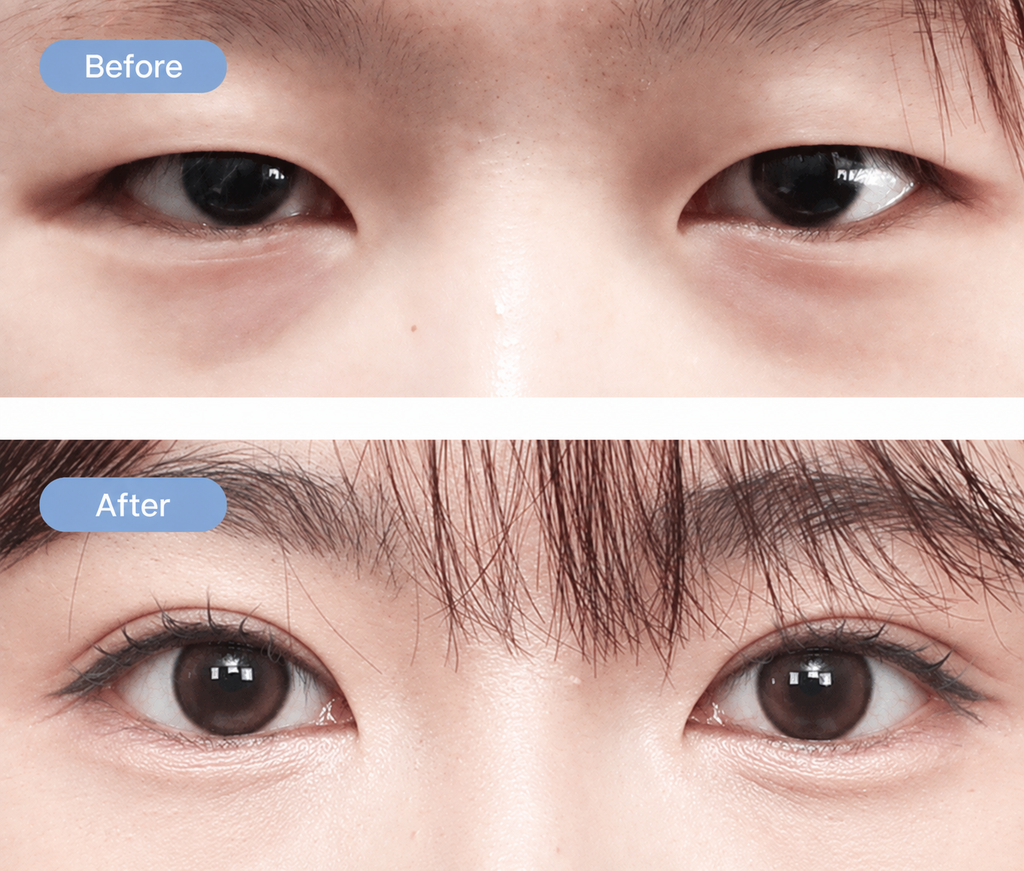
Are you unhappy with a bulbous nose tip, wide nostrils, or a nose that looks droopy from the side?
Not everyone considering rhinoplasty wants to change their entire nose. Sometimes, the main concern is simply the shape, width, or definition of the nasal tip.
Nose Tip Surgery in Busan focuses on refining the lower part of the nose to create a more defined, balanced appearance.
Depending on your nasal anatomy, surgery may involve reshaping existing cartilage, improving tip support, or adjusting tip projection.
At Haneul Plastic Surgery in Busan, the surgical approach is selected according to the underlying cause of each patient’s concern rather than applying the same technique to every nose.
If you’re considering Nose Tip Surgery in Korea, this guide explains the different nose tip concerns, surgical techniques, recovery timeline, and what to expect from your results.
- What Is Nose Tip Surgery?
- Nose Tip Surgery in Busan: Procedure Time & Recovery
- Bulbous vs Droopy vs Wide Nose Tip: What’s the Difference?
- How Does Haneul Plastic Surgery Correct a Bulbous or Droopy Nose Tip?
- Nose Tip Surgery Before & After: What Results Can You Expect?
- Postoperative Care After Nose Tip Surgery at Haneul
- Who Is a Good Candidate for Nose Tip Surgery?
- Nose Tip Surgery in Busan: Frequently Asked Questions
What Is Nose Tip Surgery?
Nose tip surgery, also called tip rhinoplasty or tip plasty, is a surgical procedure designed to improve the shape, definition, projection, or position of the nasal tip.
Unlike full rhinoplasty, which may involve changes to the nasal bridge, bones, and other structures, nose tip surgery primarily focuses on the lower portion of the nose.
Depending on your anatomy, it may help address:
- Bulbous nose tip: A rounded or poorly defined tip
- Wide nose tip: A tip that appears broad from the front
- Droopy nose tip: A tip that points downward or lacks support
- Low nose tip: Insufficient tip projection or height
- Nasal tip asymmetry: Uneven cartilage shape or tip position
Some patients may benefit from nose tip correction alone, while others may need additional rhinoplasty procedures to achieve balanced proportions.
The goal is not necessarily to make every nose smaller or sharper, but to create a nasal tip that complements the rest of the face.

Nose Tip Surgery in Busan: Procedure Time & Recovery
At Haneul Plastic Surgery, nose tip surgery is planned according to the patient’s nasal structure and the complexity of the correction.
| Surgery Information | Details |
|---|---|
| Surgery Time | Approximately 1–1.5 hours |
| Anesthesia | Local or general anesthesia, depending on the procedure |
| Hospitalization | Generally not required |
| Stitch Removal | Approximately 7 days after surgery |
| Follow-Up Visits | Approximately 2–3 visits |
| Initial Recovery | Approximately 3–4 days for early daily activities |
These are general clinic guidelines. More complex surgery or combined rhinoplasty may require a different schedule.
What to Expect During Recovery
Swelling, tenderness, and temporary changes in nasal tip sensation are common after nose surgery.
Although some patients can resume light daily activities within several days, 3–4 days does not mean the nose has fully healed.
Visible swelling may persist for weeks, and subtle changes in nasal tip definition can continue for several months or longer.
International patients should also allow enough time for postoperative examinations and stitch removal before planning their return flight.
Bulbous vs Droopy vs Wide Nose Tip: What’s the Difference?
Not all nose tip concerns have the same cause.
Understanding the difference is important because each condition may require a different surgical technique.
- Bulbous Nose Tip
- A rounded, less-defined nasal tip that may be related to cartilage shape, soft tissue, or thicker nasal skin.
- Droopy Nose Tip
- A nasal tip that points downward or lacks sufficient structural support. The appearance may become more noticeable when smiling.
- Wide Nose Tip or Wide Nostrils
- A broad nasal tip and wide nostrils are different concerns. Tip refinement changes the tip structure, while nostril or alar base reduction may require a separate technique.
For example, narrowing a bulbous tip does not automatically reduce nostril width.
If the nostril base itself is wide, the surgeon may need to assess whether alar reduction (alarplasty) is appropriate.
Because excessive nostril narrowing can affect appearance and potentially breathing, this decision requires careful evaluation.
How Does Haneul Plastic Surgery Correct a Bulbous or Droopy Nose Tip?
At Haneul Plastic Surgery, the surgical method is selected after evaluating the nasal cartilage, tip height, skin thickness, and support structure.
Three approaches may be considered depending on the underlying cause.
1. Cartilage Suturing for a Mildly Bulbous Nose Tip
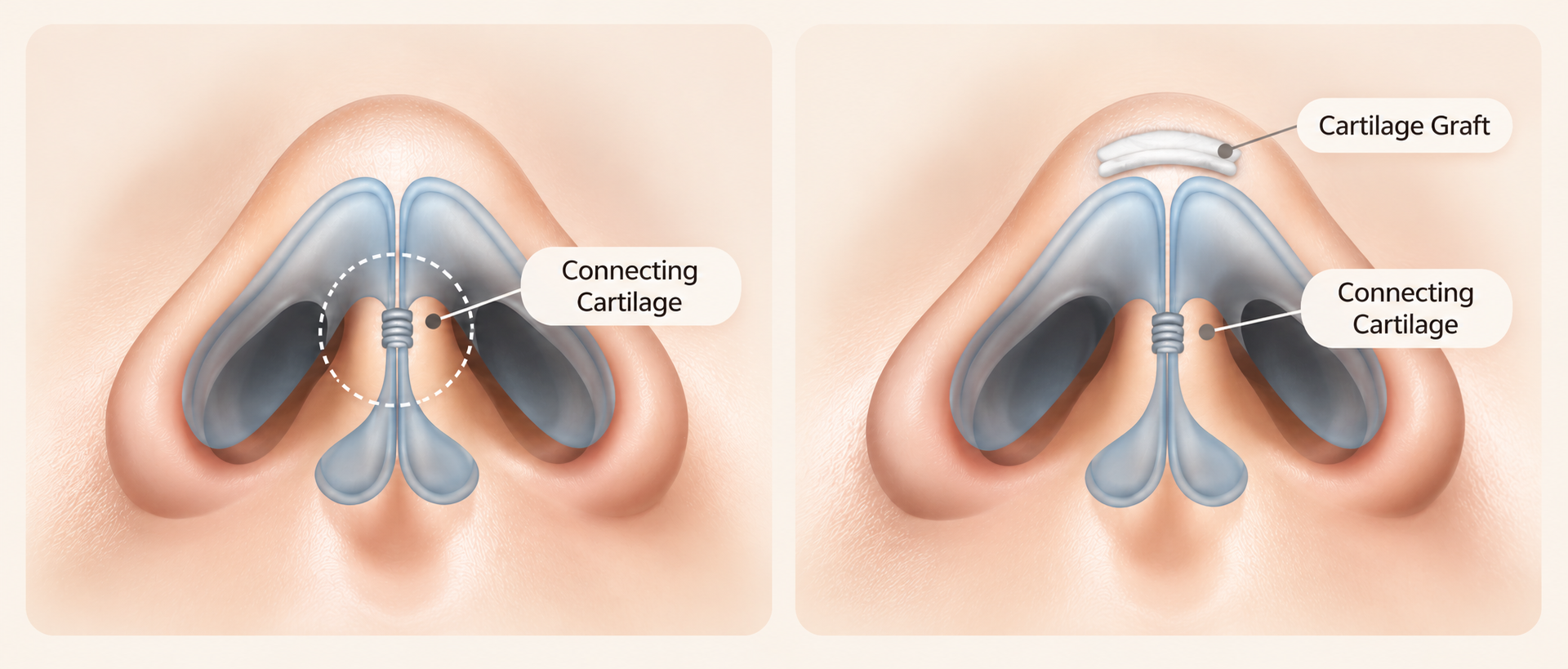
When the nasal tip is only mildly rounded, cartilage suturing may be used to reshape and bring the existing tip cartilages closer together.
This technique can help create a more defined nasal tip without necessarily requiring a major increase in tip height.
It may be suitable for patients who want subtle refinement rather than a dramatic change.
2. Cartilage Suturing + Implant for a Low Nose Tip
When the nasal tip lacks height or projection, cartilage suturing may be combined with an implant as part of the surgical plan.
The purpose is to improve nasal proportions while maintaining balance between the bridge and tip.
The implant’s location, material, and suitability must be assessed individually. Not every low nasal tip requires an implant, and cartilage grafting may be considered in some cases.
3. Septal Cartilage Support + Implant for Additional Tip Stability
Some patients require stronger structural support to maintain the desired nasal tip position.
In these cases, the surgeon may use septal cartilage, taken from the nasal septum, to reinforce the tip-supporting structure.
An implant may also be included when additional augmentation is indicated.
This approach may be considered when the nasal tip requires greater support or projection, but the final technique depends on the patient’s anatomy and available cartilage.
Comparing Nose Tip Surgery Techniques
| Nasal Tip Concern | Possible Surgical Approach |
|---|---|
| Mildly bulbous tip | Cartilage suturing |
| Low tip requiring additional height | Cartilage suturing with possible implant augmentation |
| Tip requiring stronger structural support | Septal cartilage support with possible implant augmentation |
The appropriate method is determined through a surgical consultation. Implant use is not mandatory for every nose tip correction, and no technique guarantees a particular shape or permanent absence of complications.
Nose Tip Surgery Before & After: What Results Can You Expect?
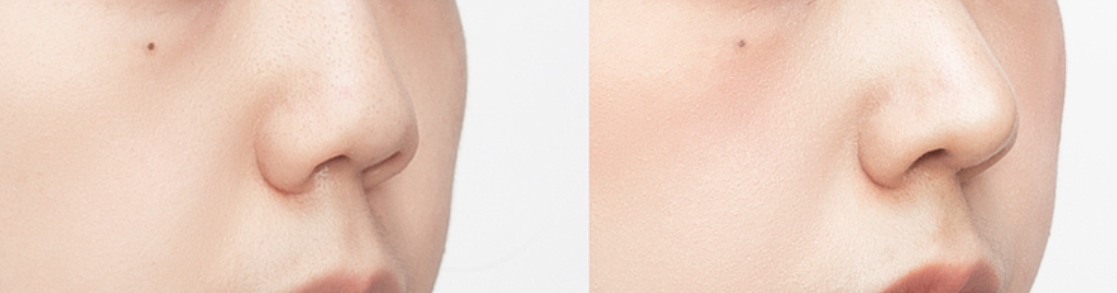
Before-and-after photos are particularly helpful when researching Nose Tip Surgery in Korea.
They can show how nasal tip width, projection, and definition may change after surgery.
However, results should be evaluated from multiple angles.
When reviewing nose tip surgery results, pay attention to:
- Front view: Does the tip look more defined without appearing unnaturally narrow?
- Side profile: Is the tip projection balanced with the nasal bridge and chin?
- Nostril shape: Has the nostril appearance changed, and was a separate alar procedure performed?
- Healing stage: Was the after photo taken during early recovery or after swelling had substantially settled?
Patients with thicker nasal skin may experience slower changes in visible tip definition.
A natural-looking result depends on more than how narrow or high the nose becomes. Facial balance, skin characteristics, cartilage structure, and functional considerations all matter.
Postoperative Care After Nose Tip Surgery at Haneul
Recovery support is an important consideration for patients undergoing nose surgery abroad.
Haneul Plastic Surgery offers a postoperative swelling-management program that may include the following treatments when clinically appropriate.
| Aftercare Program | Purpose |
|---|---|
| Swelling Management Package | Supports postoperative recovery and swelling management |
| Regenerative Laser Care | May be used as part of the clinic’s recovery protocol to support comfort and healing |
| Swelling-Reduction Injections | May be considered for selected patients following medical assessment |
The clinic describes its swelling injections as intended to help reduce swelling through hyaluronic-acid breakdown. However, postoperative swelling has multiple causes, and the effectiveness and suitability of any injection depend on its exact formulation and indication.
Not every patient requires every aftercare treatment.
The surgeon will determine which postoperative measures are appropriate based on healing progress and the procedure performed.
Who Is a Good Candidate for Nose Tip Surgery?
Nose tip surgery may be considered for patients who:
- Feel their nasal tip looks too round or bulbous
- Want a more defined nasal tip from the front
- Have a droopy or downward-pointing nasal tip
- Want to improve tip projection without dramatically changing their entire nose
- Prefer a refined, balanced nasal appearance
However, not everyone with a wide-looking nose needs nose tip surgery alone.
If the main concern is a wide nostril base, nasal bridge, or functional breathing problem, additional evaluation and a different or combined procedure may be needed.
A consultation should also consider previous nasal surgery, skin thickness, cartilage strength, breathing function, and realistic expectations.
Nose Tip Surgery in Busan: Frequently Asked Questions
Can nose tip surgery make a bulbous nose look smaller?
Nose tip surgery may help create a narrower, more defined appearance by reshaping the tip cartilage. However, the amount of visible refinement depends on cartilage structure, skin thickness, and other anatomical factors.
Can I make my nose tip smaller without making it higher?
In some cases, yes. Cartilage reshaping or suturing may improve tip definition without a major increase in projection. The surgical plan should reflect whether you want a smaller-looking tip, additional height, or both.
Does nose tip surgery make wide nostrils smaller?
Not necessarily. Nose tip refinement and nostril reduction are different procedures. Patients with a wide nostril base may require a separate alar reduction assessment, and preserving breathing function is an important consideration.
Will my nose tip look too pointy or upturned after surgery?
An overly projected or upturned appearance is a concern for some patients. Discuss your preferred tip angle and projection with your surgeon, using reference photographs if helpful. The final appearance depends on the surgical technique, your anatomy, and healing.
How long does swelling last after nose tip surgery in Korea?
Initial swelling generally improves over the first several weeks, but nasal tip swelling can take months to settle. Patients with thicker skin or more extensive structural work may need longer before the final definition becomes apparent.
Do I need an implant for nose tip surgery?
Not always. Some patients may be suitable for cartilage suturing alone, while others require additional support or augmentation. The surgeon should explain why an implant or cartilage graft is recommended, including the potential risks and alternatives.
How long should I stay in Busan after nose tip surgery?
Haneul Plastic Surgery generally schedules stitch removal around seven days after surgery and approximately two to three follow-up visits. International patients should plan their stay around the confirmed postoperative schedule rather than the shorter initial daily-activity recovery period.
Considering Nose Tip Surgery in Busan? Consult Haneul Plastic Surgery
Whether you’re concerned about a bulbous nose tip, droopy tip, or wide nostrils, the first step is understanding what causes your nose to look the way it does.
At Haneul Plastic Surgery in Busan, the medical team evaluates nasal anatomy and individual goals to recommend an appropriate surgical approach.
International patients can request an initial consultation to discuss possible techniques, recovery, and an individualized quotation.
To get started, share your age, main concerns, preferred travel dates, and clear photographs of your nose from the front and both sides.
Contact Haneul Plastic Surgery to explore your nose tip surgery options in Busan.