If you’ve noticed deeper facial wrinkles, sagging cheeks, or a jawline that no longer looks as defined as it once did, you may be wondering whether a non-surgical lifting treatment is still enough.
Two options you may encounter when researching facial rejuvenation in Korea are SMAS facelift surgery and Ultherapy PRIME.
Both aim to improve the appearance of facial sagging, but they work in fundamentally different ways.
Ultherapy PRIME uses focused ultrasound energy to stimulate collagen remodeling without surgery.
A SMAS facelift, on the other hand, surgically lifts and repositions deeper facial tissues to address more significant sagging.
So, when comparing SMAS Facelift vs Ultherapy PRIME, which treatment is better for aging skin?
For patients considering a SMAS Facelift in Busan, understanding the difference is especially important when non-surgical lifting treatments no longer provide the improvement they want.
At Haneul Plastic Surgery and Haneul Dermatology in Busan, patients can explore surgical and non-surgical lifting options based on their facial anatomy, degree of skin laxity, and treatment goals.
- What Is a SMAS Facelift?
- SMAS Facelift vs Ultherapy PRIME: Key Differences
- When Is a SMAS Facelift the Better Option?
- Can Ultherapy PRIME Replace a SMAS Facelift?
- SMAS Facelift Before & After: What Results Can You Expect?
- How Long Do SMAS Facelift Results Last?
- SMAS Facelift Recovery & Aftercare at Haneul Plastic Surgery
- Why Consider Haneul Plastic Surgery for a SMAS Facelift in Busan?
- SMAS Facelift vs Ultherapy PRIME: Frequently Asked Questions
What Is a SMAS Facelift?
A SMAS facelift is a surgical facial rejuvenation procedure designed to improve sagging skin and reposition the deeper tissues that support facial contours.
SMAS stands for Superficial Musculoaponeurotic System, a layer of connective tissue associated with the facial muscles beneath the skin.
As facial aging progresses, changes in skin elasticity, fat distribution, and deeper tissue support can contribute to:
- Sagging cheeks and jowls
- Deepening nasolabial folds
- Marionette lines around the mouth
- Loss of jawline definition
- Loose skin around the lower face and neck
A SMAS facelift addresses these concerns by lifting and repositioning deeper facial tissues rather than relying on skin tightening alone.
How Does SMAS Facelift Surgery Work?
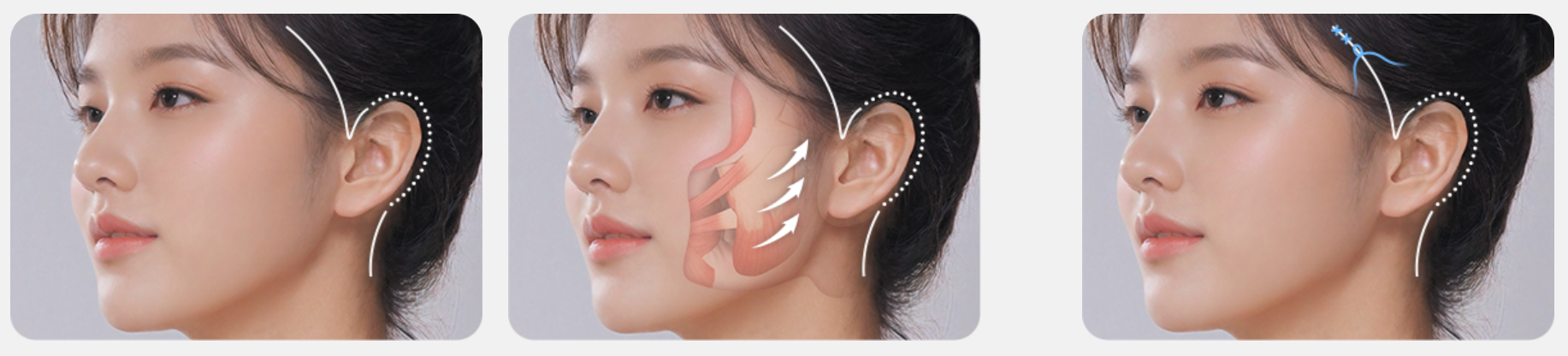
At Haneul Plastic Surgery, the facelift approach involves incisions extending from the hairline area around the ear and toward the region behind the ear, depending on the surgical plan.
Through these incisions, the surgeon accesses the underlying tissues and adjusts the SMAS layer to improve facial support and contour.
Excess skin may also be repositioned or removed as appropriate.
By addressing the deeper supporting structures, the procedure can produce more substantial lifting than treatments that rely on collagen stimulation alone.
However, the exact incision pattern and surgical technique depend on the patient’s anatomy, degree of sagging, and treatment goals.

SMAS Facelift vs Ultherapy PRIME: Key Differences
The biggest difference between these treatments is how they address facial sagging.
A SMAS facelift surgically repositions deeper facial tissues, while Ultherapy PRIME uses micro-focused ultrasound energy to stimulate collagen remodeling at targeted depths.
Ultherapy PRIME does not surgically reposition the SMAS layer, even though ultrasound energy can be delivered to tissue depths associated with the superficial muscular aponeurotic system.
SMAS Facelift vs Ultherapy PRIME Comparison
| Comparison | SMAS Facelift | Ultherapy PRIME |
|---|---|---|
| Treatment Type | Surgical facelift | Non-surgical ultrasound lifting |
| Primary Goal | Reposition sagging facial tissues | Improve mild to moderate skin laxity |
| Best Suited For | More noticeable facial sagging and jowls | Early sagging and gradual skin tightening |
| Treatment Time | Approximately 2–3 hours | Approximately 20–40 minutes |
| Anesthesia | Sedation or general anesthesia | Topical anesthesia or sedation, depending on the treatment plan |
| Hospitalization | Generally not required | Not required |
| Recovery | Initial recovery around 7 days; visible swelling may last longer | Usually little to no downtime |
| Results | More substantial structural lifting may be possible | Subtle, gradual improvement |
| Longevity | Long-lasting, but not permanent | Temporary; maintenance may be needed |
| Indicative Cost | Approximately KRW 6 million | Approximately KRW 3 million for 600 shots |
Prices are indicative Haneul clinic figures, not fixed quotations. Treatment suitability, recovery, and results vary by patient.
For patients with significant jowls or loose skin, the important question is not simply which treatment costs less.
It is whether the chosen procedure can realistically address the degree of tissue sagging.
When Is a SMAS Facelift the Better Option?
A SMAS facelift may be more appropriate when facial aging involves significant tissue descent rather than only mild loss of skin firmness.
1. You Have Noticeable Jowls or Deep Facial Sagging
As the lower face ages, the jawline may become less defined and the cheeks may appear heavier.
When sagging is substantial, stimulating collagen alone may not provide enough lifting to achieve the desired change.
A surgical facelift can reposition the underlying tissues and address excess skin when indicated.
2. You Want a More Significant, Longer-Lasting Lifting Result
Some patients prefer a single surgical procedure that may provide a more substantial improvement rather than undergoing repeated non-surgical lifting treatments.
A SMAS facelift can produce long-lasting changes to facial contour.
However, facelift results are not permanent, and surgery does not stop the natural aging process. The degree and duration of improvement vary between patients.
3. Ultherapy or Other Lifting Treatments Haven’t Given You Enough Improvement
You may have already tried ultrasound lifting, radiofrequency treatments, or other non-surgical procedures.
If the results were too subtle for your expectations, it may be worth consulting a plastic surgery specialist.
This does not necessarily mean those treatments failed. They may have improved skin firmness without correcting the deeper tissue descent responsible for your main concern.
4. You Have More Facial Sagging Than Expected for Your Age
Although facelifts are more commonly considered by patients in their 40s, 50s, and beyond, age alone does not determine whether someone needs surgery.
Genetics, significant weight changes, skin characteristics, and facial anatomy can contribute to earlier sagging.
A patient in their late 30s or early 40s with noticeable jowls may have different treatment needs from someone older with relatively good facial support.
The decision should be based on anatomy, medical suitability, and realistic expectations rather than a specific age.
Can Ultherapy PRIME Replace a SMAS Facelift?
No. Ultherapy PRIME cannot reproduce the same structural lifting effect as a surgical SMAS facelift.
However, that does not mean every patient needs surgery.
Ultherapy PRIME may be appropriate for patients who:
- Have mild to moderate skin laxity
- Want gradual improvements in facial firmness
- Prefer to avoid surgical incisions
- Cannot accommodate a lengthy recovery period
- Understand that results will be more subtle than surgical lifting
For these patients, non-surgical lifting may be a reasonable option.
On the other hand, patients with pronounced jowls, substantial excess skin, or significant tissue descent may be disappointed if they expect ultrasound lifting to produce facelift-like results.
At Haneul, patients interested in Ultherapy PRIME in Busan can discuss non-surgical options with Haneul Dermatology, while those considering more substantial lifting can consult Haneul Plastic Surgery.
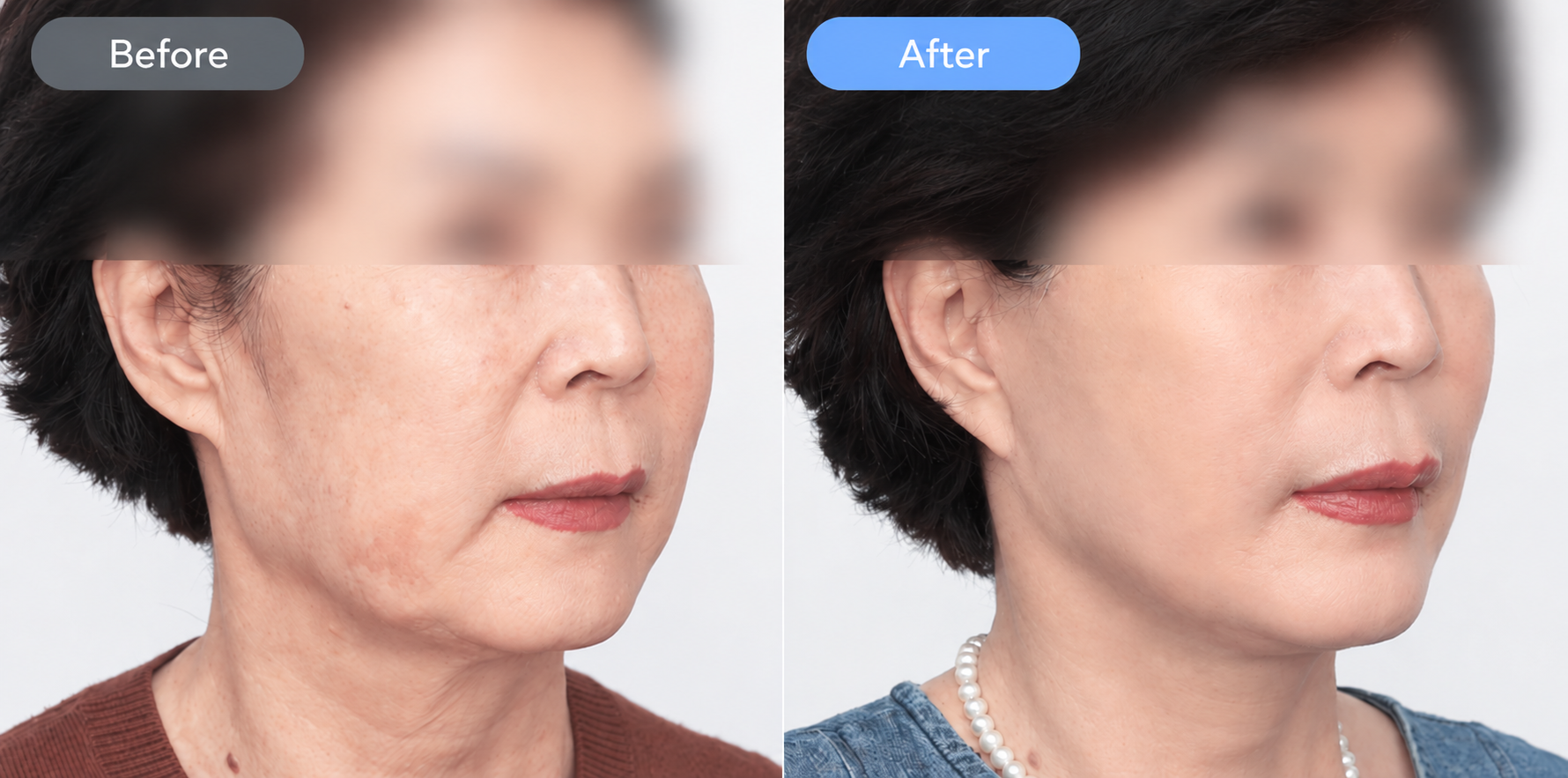
SMAS Facelift Before & After: What Results Can You Expect?
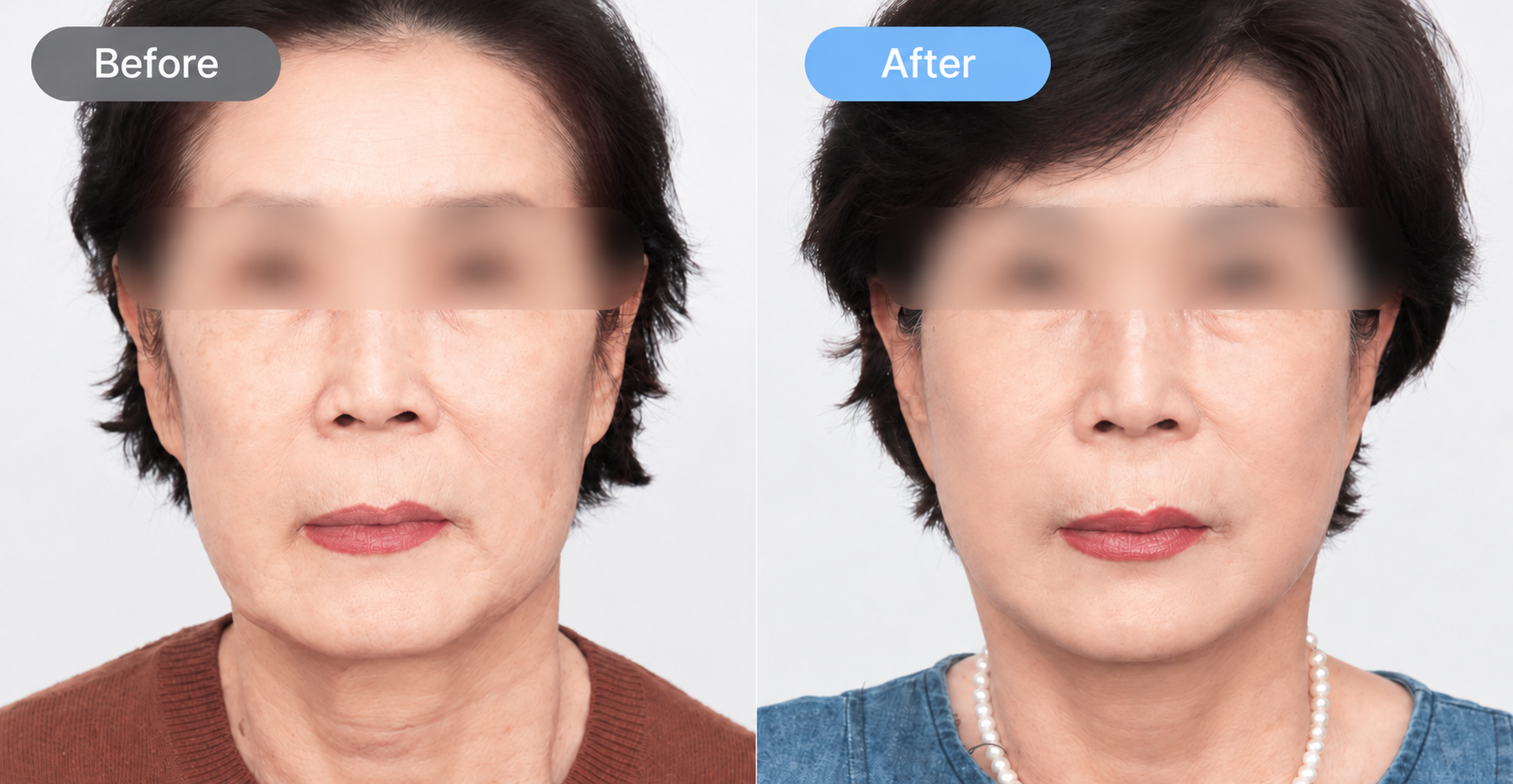
Before-and-after photographs can help patients understand the type of improvement that may be possible with surgical facial lifting.
When reviewing SMAS Facelift in Korea results, pay particular attention to changes in the lower face and jawline rather than focusing only on smoother skin.
What Should You Look for in Facelift Before & After Photos?
Consider whether the postoperative photographs show:
- A more defined jawline
- Reduced appearance of jowls
- Improvement in lower-face sagging
- More balanced cheek and facial contours
- A natural-looking result without excessive skin tension
Photographs should ideally use similar lighting, angles, and facial expressions.
It is also important to know how long after surgery the images were taken, because swelling can affect early results.
Individual outcomes vary, and photographs cannot guarantee the same improvement for every patient.
How Long Do SMAS Facelift Results Last?
One of the main reasons patients consider facelift surgery is the possibility of achieving a more durable improvement than with non-surgical lifting.
Because a SMAS facelift surgically repositions deeper tissues, its effects may remain visible for many years.
However, the results are not permanent.
Natural aging, changes in skin elasticity, weight fluctuations, and individual healing can influence how the face changes over time.
Many patients continue to see improvements in their facial contours years after facelift surgery, although the degree and duration of improvement vary.
Rather than expecting a permanently lifted face, patients should understand a facelift as a procedure that can create a longer-lasting improvement in facial contour while the normal aging process continues.
SMAS Facelift Recovery & Aftercare at Haneul Plastic Surgery
Recovery is an important part of SMAS facelift surgery, especially for international patients planning their treatment in Korea.
After surgery, swelling, bruising, tightness, and temporary changes in facial sensation are common. Although initial recovery may take approximately one to two weeks, deeper tissue healing and scar maturation can continue for several months.
At Haneul Plastic Surgery in Busan, patients can receive a postoperative care program designed to support healing, manage swelling, and monitor their recovery.
Postoperative Care Programs at Haneul Plastic Surgery
| Aftercare Program | Purpose |
|---|---|
| Scar Laser Care | May help improve the appearance of surgical scars during the healing process |
| Swelling-Reduction Injections | May be used in selected cases to address postoperative swelling, depending on the medication and medical assessment |
| Postoperative Inpatient Care | Provides additional observation and recovery support when arranged as part of the treatment plan |
| Swelling Management Package | A combination of postoperative care measures intended to support swelling management |
| Facial Compression Garment | May help provide gentle support and manage swelling when recommended by the surgeon |
The specific treatments and schedule depend on the patient’s condition and surgical recovery. Not every patient requires every component of the program.
How Long Should International Patients Stay in Busan After a SMAS Facelift?
Haneul Plastic Surgery generally schedules stitch removal approximately two weeks after surgery, with around two follow-up visits.
While some patients begin returning to light daily activities after approximately seven days, visible swelling and bruising may take longer to improve.
International patients should plan their stay around the confirmed postoperative schedule rather than the initial recovery estimate.
The medical team will assess healing progress and provide individualized guidance before the patient returns home.
Why Consider Haneul Plastic Surgery for a SMAS Facelift in Busan?
Choosing facelift surgery requires careful consideration of the surgeon’s experience, surgical plan, anesthesia, and postoperative care.
Haneul Plastic Surgery offers surgical facial rejuvenation within a medical setting that also includes dermatology services.
Experienced Plastic Surgery Specialists
The clinic’s medical team includes a plastic surgery specialist with extensive clinical experience.
Surgical planning considers the patient’s facial anatomy, degree of tissue sagging, and desired outcome.
Surgical and Non-Surgical Lifting Options
With both Haneul Plastic Surgery and Haneul Dermatology, patients can explore whether a surgical facelift or a non-surgical treatment is more appropriate for their concerns.
This is particularly relevant for patients who are uncertain whether Ultherapy PRIME will provide enough improvement.
SMAS Facelift vs Ultherapy PRIME: Frequently Asked Questions
Is 40 too young for a SMAS facelift?
Not necessarily. While facelift surgery is more commonly considered by patients in their 40s and older, age alone is not the deciding factor. The degree of facial sagging, skin condition, underlying anatomy, and treatment goals are more important. Patients with mild laxity may not need surgery, regardless of age.
Is a SMAS facelift worth it if Ultherapy didn’t work for me?
It may be worth considering if your main concern is significant tissue sagging that non-surgical treatments cannot adequately address. However, an unsatisfactory Ultherapy result does not automatically mean you need a facelift. A plastic surgery consultation is necessary to determine the underlying cause of your concerns.
Does Ultherapy make future facelift surgery more difficult?
Some patients worry that previous energy-based treatments may affect tissue planes during later surgery. The clinical significance varies, and there is insufficient evidence to conclude that Ultherapy routinely prevents or substantially complicates a future facelift. Tell your surgeon about all previous lifting treatments, including the treatment areas and dates.
Will a SMAS facelift make my face look unnatural or too tight?
An unnatural or overly tight appearance is a concern for many patients. A well-planned facelift aims to reposition facial tissues while maintaining natural proportions. However, results depend on surgical technique, anatomy, healing, and individual factors, and complications or unsatisfactory aesthetic outcomes remain possible.
How long does a SMAS facelift last compared with Ultherapy PRIME?
A SMAS facelift generally provides longer-lasting structural improvement, potentially remaining visible for many years, while Ultherapy PRIME produces more gradual and temporary changes. Neither treatment stops aging, and the duration of results varies between individuals.
What are the risks of SMAS facelift surgery?
Possible risks include bleeding, infection, hematoma, scarring, temporary or persistent changes in sensation, nerve injury, asymmetry, anesthesia-related complications, and dissatisfaction with the aesthetic result. Patients should discuss their individual risk factors and the clinic’s complication-management arrangements before surgery.
How long should I stay in Busan after a SMAS facelift?
Haneul Plastic Surgery generally schedules stitch removal approximately two weeks after surgery, with around two follow-up visits. International patients should plan their travel around the confirmed postoperative schedule and allow additional time if recovery is slower than expected.
Considering a SMAS Facelift in Busan? Consult Haneul Plastic Surgery
If you’re experiencing noticeable jowls, deep facial sagging, or loss of jawline definition, choosing between surgery and non-surgical lifting can be difficult.
Ultherapy PRIME may be appropriate for milder skin laxity, but a SMAS facelift may offer more substantial improvement when deeper facial tissues have descended.
At Haneul Plastic Surgery in Busan, the medical team can evaluate your facial anatomy, explain the potential benefits and risks of surgery, and recommend a treatment plan based on your concerns.
International patients can request an initial consultation by sharing their age, main facial concerns, relevant medical history, preferred travel dates, and clear facial photographs.
Contact Haneul Plastic Surgery to discuss whether SMAS facelift surgery is the right option for your facial sagging.