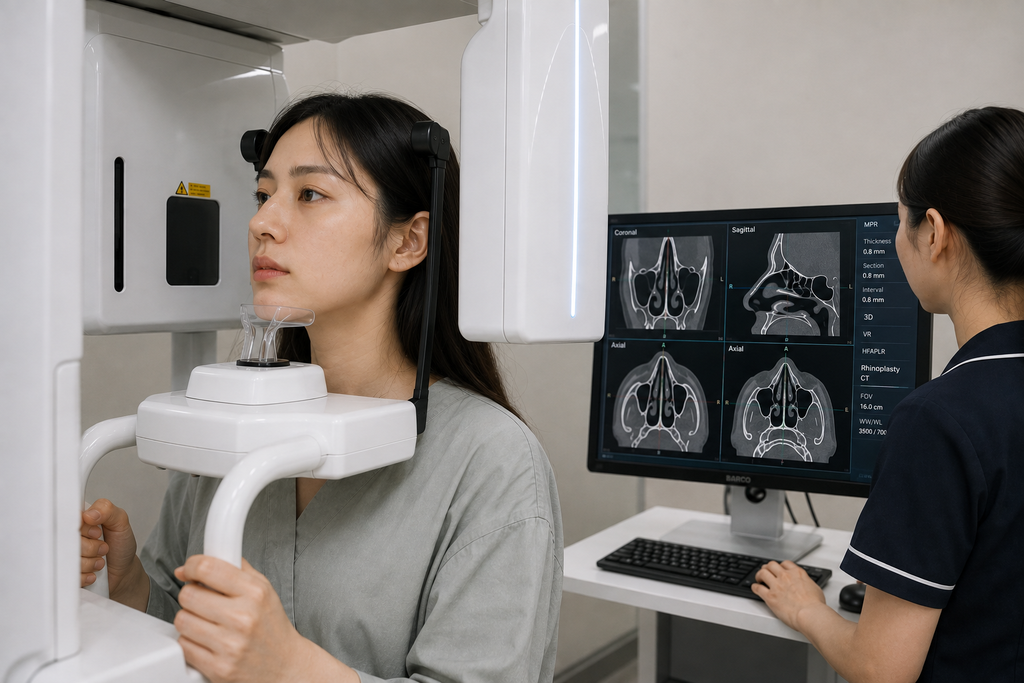

Under-eye bags do not always come from having “too much fat.”
In some people, under-eye fat protrudes forward while the area directly below it—the tear trough—appears hollow. This uneven transition can create shadows beneath the eyes, making the face look tired, dark, or older.
Under eye fat repositioning is designed to redistribute existing under-eye fat rather than simply removing it.
At Haneul Plastic Surgery in Busan, the procedure redistributes protruding under-eye fat toward hollow areas while reinforcing the supporting orbital septum, with the goal of creating a smoother and more natural-looking under-eye contour.
- What Is Under Eye Fat Repositioning?
- Under Eye Fat Repositioning Price in Busan
- Why Do Under-Eye Bags and Tear Troughs Make You Look Tired?
- Who May Consider Under Eye Fat Repositioning?
- Under Eye Fat Repositioning Before & After
- How Is Under Eye Fat Repositioning Performed?
- Fat Repositioning vs. Fat Removal
- Under Eye Fat Repositioning at a Glance
- Will Under Eye Fat Repositioning Improve Dark Circles?
- Recovery & Aftercare
- Why Choose Haneul for Under Eye Fat Repositioning in Busan?
- Under Eye Fat Repositioning FAQ
What Is Under Eye Fat Repositioning?
Under eye fat repositioning is a surgical procedure that redistributes protruding fat beneath the lower eyelid into surrounding areas where volume is lacking.
Instead of simply removing the fat that creates an under-eye bag, the existing fat is repositioned more evenly across the under-eye area.
The procedure may help improve concerns such as:
- Bulging under-eye bags
- Uneven under-eye contour
- Tear trough hollows
- Shadows beneath the eyes
- A tired-looking appearance
- Under-eye changes that make the face appear older
At Haneul, the procedure is performed through an incision inside the lower eyelid, without making an external skin incision.
The orbital septum supporting the under-eye tissues is also reinforced as part of the surgical process.

Under Eye Fat Repositioning Price in Busan
For international patients considering under eye fat repositioning in Korea, treatment price is often one of the first things they want to know.
The standard price for under eye fat repositioning at Haneul Plastic Surgery is:
KRW 1,300,000
| Treatment | Price |
|---|---|
| Under Eye Fat Repositioning | KRW 1,300,000 |
The final price may vary if additional treatment or a different surgical plan is recommended after consultation.
If another procedure is recommended, the reason and any additional cost should be confirmed during consultation before surgery.
Why Do Under-Eye Bags and Tear Troughs Make You Look Tired?
The appearance of the under-eye area depends on more than skin color.
When under-eye fat protrudes forward while the area beneath it is relatively hollow, the transition between the lower eyelid and cheek becomes uneven.
This can create a visible shadow, making the area appear darker even when pigmentation is not the primary problem.
Dark-looking under-eyes can be influenced by:
- Protruding under-eye fat and shadowing
- Tear trough hollowness
- Skin pigmentation
- Thin skin and visible underlying structures
- Skin laxity
- A combination of several factors
This distinction is important because not all dark circles have the same cause.
For this reason, under eye fat repositioning should not be considered a treatment for every type of dark circle.
Who May Consider Under Eye Fat Repositioning?
Under eye fat repositioning may be considered if you:
- Have an uneven or bumpy under-eye contour
- Have noticeable fat bulging beneath the eyes
- Have a visible groove or tear trough below the under-eye bag
- Frequently look tired because of shadows beneath the eyes
- Feel that your under-eye area makes you look older
- Want to improve the transition between the lower eyelid and upper cheek
However, the procedure is not automatically appropriate simply because the under-eye area looks dark.
If pigmentation, significant skin laxity, or volume deficiency is the primary concern, another treatment—or a combined approach—may need to be considered.
Under Eye Fat Repositioning Before & After
Before-and-after photographs are especially useful for under eye fat repositioning because improvement should not be judged only by whether the under-eye bag becomes smaller.
The relationship between the under-eye bag, tear trough, shadow, and lower eyelid-to-cheek contour should be evaluated together.
Haneul has actual before-and-after cases available for under eye fat repositioning.
[UNDER EYE FAT REPOSITIONING BEFORE & AFTER GALLERY]
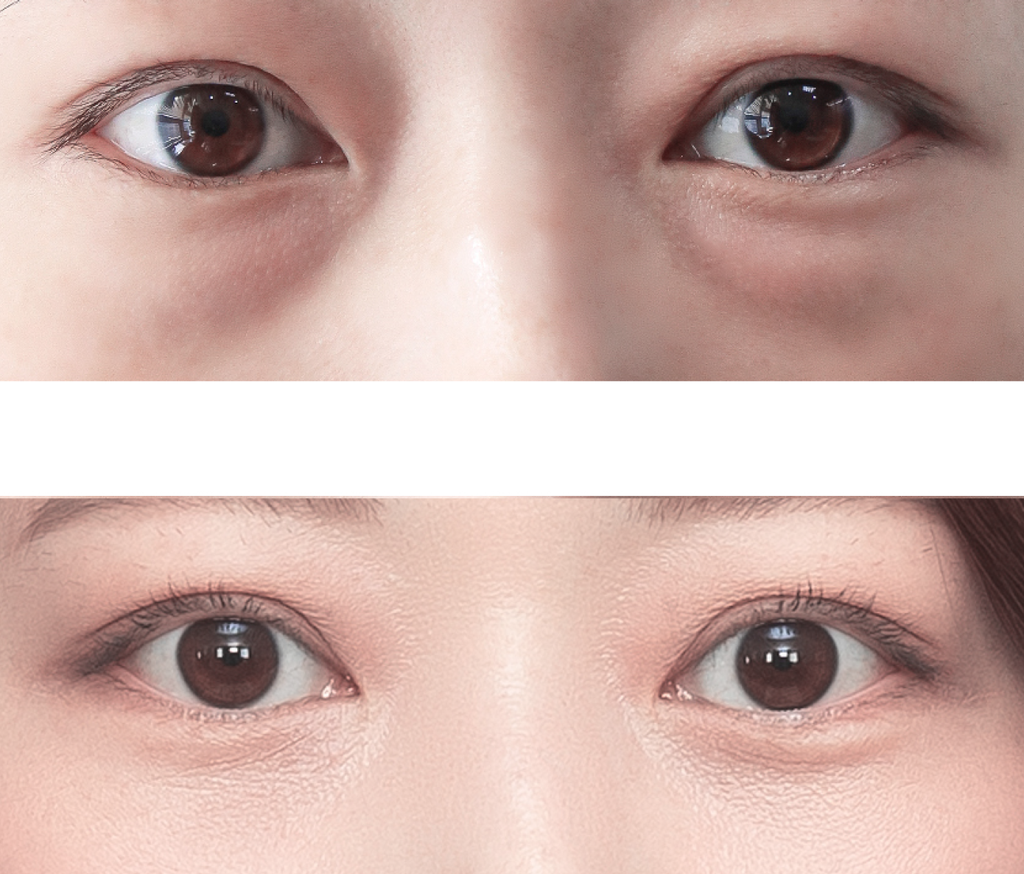
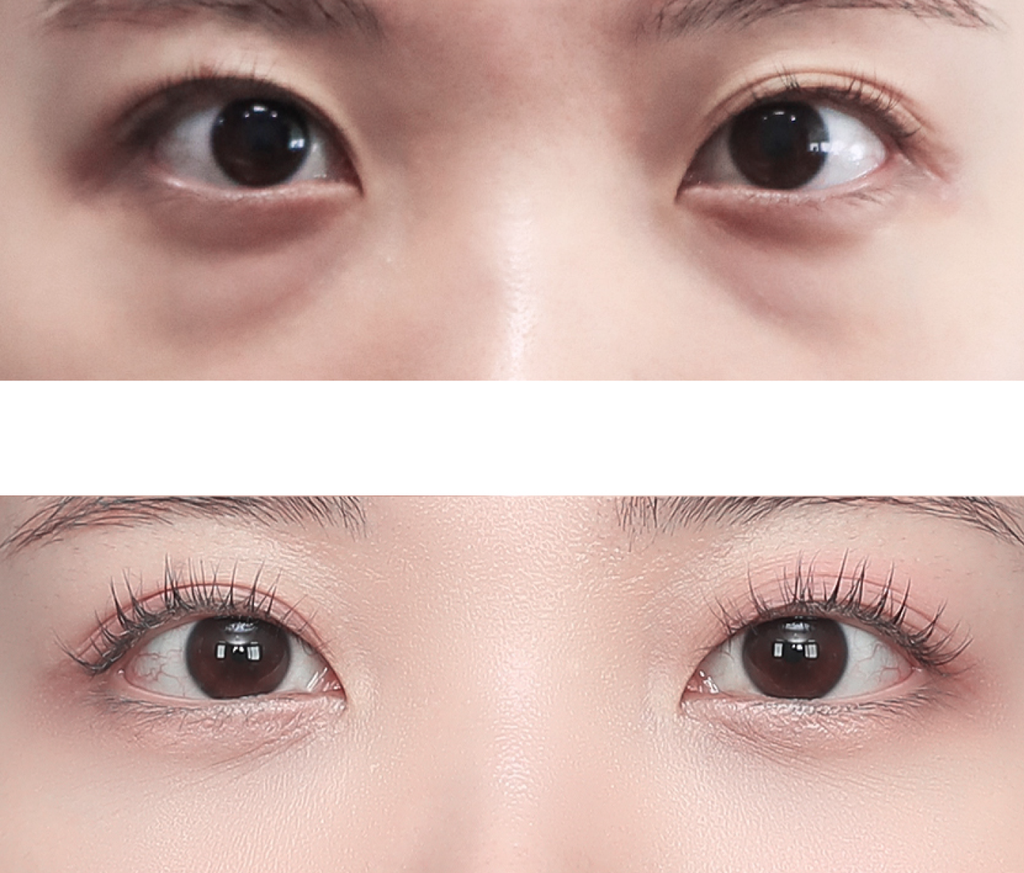
When reviewing before-and-after cases, consider changes in:
- Under-eye bulging
- Tear trough depth
- Shadow beneath the eyes
- Smoothness between the lower eyelid and cheek
- Overall tired-looking appearance
- Preservation of the natural lower-eyelid contour
It is also important to check when the postoperative photograph was taken, as swelling and tissue settling can affect the appearance during early recovery.
Individual results vary, and before-and-after photographs should not be interpreted as a guarantee of the same result for another patient.
How Is Under Eye Fat Repositioning Performed?
Haneul’s under eye fat repositioning procedure is performed through the inner surface of the lower eyelid rather than through an external skin incision.
The surgical process can be divided into four main steps.
1. Incision Inside the Lower Eyelid
A small incision is made through the conjunctiva on the inside of the lower eyelid.
Because the surgical approach is from inside the eyelid, there is no external skin incision beneath the eyelashes.
2. Under-Eye Fat Repositioning
After accessing the under-eye tissues, the protruding fat is redistributed toward hollow areas.
The objective is not simply to remove volume, but to create a smoother transition between the lower eyelid and surrounding areas.
3. Orbital Septum Reinforcement
The stretched orbital septum, which supports the under-eye tissues, is reinforced during the procedure.
This step helps restore support to the structures surrounding the under-eye fat.
4. Natural Under-Eye Contour
The tissues are repositioned with consideration for the patient’s existing lower-eyelid contour, including preservation of the natural aegyo-sal, or subtle fullness immediately beneath the lower lashes.
The goal is to create a smoother under-eye contour without unnecessarily flattening the natural shape of the lower eyelid.
Fat Repositioning vs. Fat Removal: What Is the Difference?
Under-eye fat removal and under-eye fat repositioning are not the same procedure.
| Fat Removal | Under Eye Fat Repositioning | |
|---|---|---|
| Main Approach | Removes protruding fat | Redistributes existing fat |
| Main Goal | Reduce under-eye fullness | Smooth the transition between bulging and hollow areas |
| Existing Fat | Removed | Preserved and repositioned |
| Tear Trough | May require separate consideration | Existing fat may be redistributed toward hollow areas |
| Planning | Depends on amount and location of fat | Depends on fat protrusion, hollowing, and surrounding anatomy |
Removing fat alone is not automatically better simply because the under-eye area appears puffy.
If the area beneath the fat is already hollow, reducing volume without considering the overall contour may not sufficiently address the shadowing that makes the eyes look tired.
The appropriate approach depends on individual under-eye anatomy.
Under Eye Fat Repositioning at a Glance
| Surgery Information | Details |
|---|---|
| Surgery Time | Approx. 30 minutes |
| Anesthesia | Sedation |
| External Skin Incision | None |
| Hospitalization | Not required |
| Follow-Up Visit | Approx. 1 visit |
| Initial Recovery | Approx. 1–2 days |
| Approach | Transconjunctival / inside the lower eyelid |
| Main Treatment Areas | Under-eye fat bulging and surrounding hollow areas |
The exact surgical plan and recovery process may vary according to individual anatomy and healing.
Will Under Eye Fat Repositioning Improve Dark Circles?
It depends on why the dark circles are visible.
This is one of the most important distinctions for patients considering under eye fat repositioning in Korea.
If protruding fat and a deep tear trough create a shadow beneath the eyes, smoothing that contour may reduce the shadow and make the under-eye area appear brighter.
However, under eye fat repositioning does not directly remove skin pigmentation.
Dark circles related primarily to pigmentation, thin skin, visible blood vessels, or other causes may remain even if the under-eye contour improves.
The first question during consultation should therefore be:
“What is actually causing my under-eye darkness?”
rather than simply:
“Will this surgery remove my dark circles?”
Recovery & Aftercare
Haneul lists the initial recovery period for under eye fat repositioning as approximately 1–2 days.
However, initial recovery does not mean that all swelling or bruising will disappear within two days.
Temporary postoperative changes may include:
- Swelling
- Bruising
- Tightness
- Temporary unevenness caused by swelling
- Mild discomfort
- Temporary changes in the appearance of the lower eyelid
The under-eye contour should therefore not be judged too early.
Patients should follow the postoperative instructions provided by the clinic and contact the medical team if unusual or persistent symptoms occur.
Why Choose Haneul for Under Eye Fat Repositioning in Busan?
Under-eye surgery should not begin with the assumption that every visible bag needs to be removed.
The relationship between protruding fat, hollow areas, the orbital septum, skin condition, and natural lower-eyelid contour should be evaluated together.
Transconjunctival Approach
Haneul performs under eye fat repositioning through an incision inside the lower eyelid rather than making an external skin incision beneath the eyelashes.
Fat Redistribution Rather Than Simple Removal
The existing under-eye fat is redistributed toward hollow areas to create a smoother transition beneath the eye.
This allows both protrusion and surrounding hollowness to be considered within the surgical plan.
Orbital Septum Reinforcement
Haneul reinforces the stretched orbital septum as part of the procedure, addressing the supporting structure around the under-eye fat.
Preservation of Natural Aegyo-Sal
The procedure is planned with consideration for preserving the natural fullness directly beneath the lower lashes rather than flattening the entire under-eye area.
Individual Under-Eye Assessment
Dark circles, eye bags, hollowness, and skin laxity can look similar but have different causes.
The appropriate surgical or non-surgical approach should therefore be determined after evaluating the patient’s individual anatomy.
Under Eye Fat Repositioning FAQ
Will under eye fat repositioning get rid of my dark circles?
Not necessarily.
Under eye fat repositioning can help when dark-looking under-eyes are caused partly by shadows from protruding fat and tear trough hollowness.
However, pigmentation, thin skin, visible underlying structures, and other causes of dark circles are not directly removed by repositioning fat.
The cause of the darkness should therefore be evaluated before surgery.
What is the difference between under eye fat repositioning and fat grafting?
Under eye fat repositioning uses fat that already exists beneath the lower eyelid and redistributes it toward hollow areas.
Fat grafting involves harvesting fat from another area of the body and adding volume where needed.
Some patients may only need repositioning, while others with more significant volume deficiency may be advised to consider additional volume treatment.
The appropriate approach depends on individual anatomy rather than assuming that both procedures are always necessary.
What is the difference between under eye fat repositioning and lower blepharoplasty?
Under eye fat repositioning primarily addresses protruding fat and surrounding hollowness through an internal lower-eyelid approach.
Lower blepharoplasty may involve a different surgical approach and can be considered when excess or lax lower-eyelid skin also needs to be addressed.
Which procedure is appropriate depends on fat distribution, skin laxity, age-related changes, and overall lower-eyelid anatomy.
Will I have a visible scar after under eye fat repositioning?
Haneul performs the procedure through the conjunctiva on the inside of the lower eyelid.
Because there is no external skin incision beneath the eyelashes with this approach, there is no external incision line from the transconjunctival access itself.
How long does swelling last after under eye fat repositioning?
Haneul lists an initial recovery period of approximately 1–2 days, but swelling and bruising can remain longer than the initial recovery period.
Individual recovery varies according to anatomy, surgical plan, and healing response.
Can under eye bags come back after fat repositioning?
Surgery does not stop the natural aging process, so future changes in the under-eye tissues can still occur.
Haneul’s procedure includes reinforcement of the orbital septum in addition to redistribution of the under-eye fat, addressing the supporting structures as part of the surgical plan.
Long-term changes will still vary between individuals.
How do I know whether my tired-looking eyes are caused by eye bags, hollowness, or dark circles?
The appearance can result from more than one factor at the same time.
Protruding fat can create a bulge, tear trough hollowness can create a groove and shadow, pigmentation can darken the skin itself, and thin skin may make underlying structures more visible.
This is why treatment should be selected after identifying the main cause rather than choosing a procedure based only on the term “dark circles.”
Considering Under Eye Fat Repositioning in Busan?
If you are considering under eye fat repositioning in Busan, the first step is determining what is actually making the area beneath your eyes look tired or uneven.
You can send Haneul Plastic Surgery:
- Clear front-facing photos
- 45-degree photos
- Photos taken in natural lighting
- Your main under-eye concerns
- Information about previous under-eye filler or surgery
- Your expected travel dates in Korea
The medical team can then better understand whether your primary concern appears to involve protruding fat, tear trough hollowness, skin laxity, or another factor before your in-person consultation.
For international patients researching under eye fat repositioning in Korea, it is especially important not to assume that every dark circle or hollow under-eye requires the same procedure.
Not sure whether your concern is an eye bag, tear trough, or dark circle?
Request an under-eye consultation with Haneul Plastic Surgery.