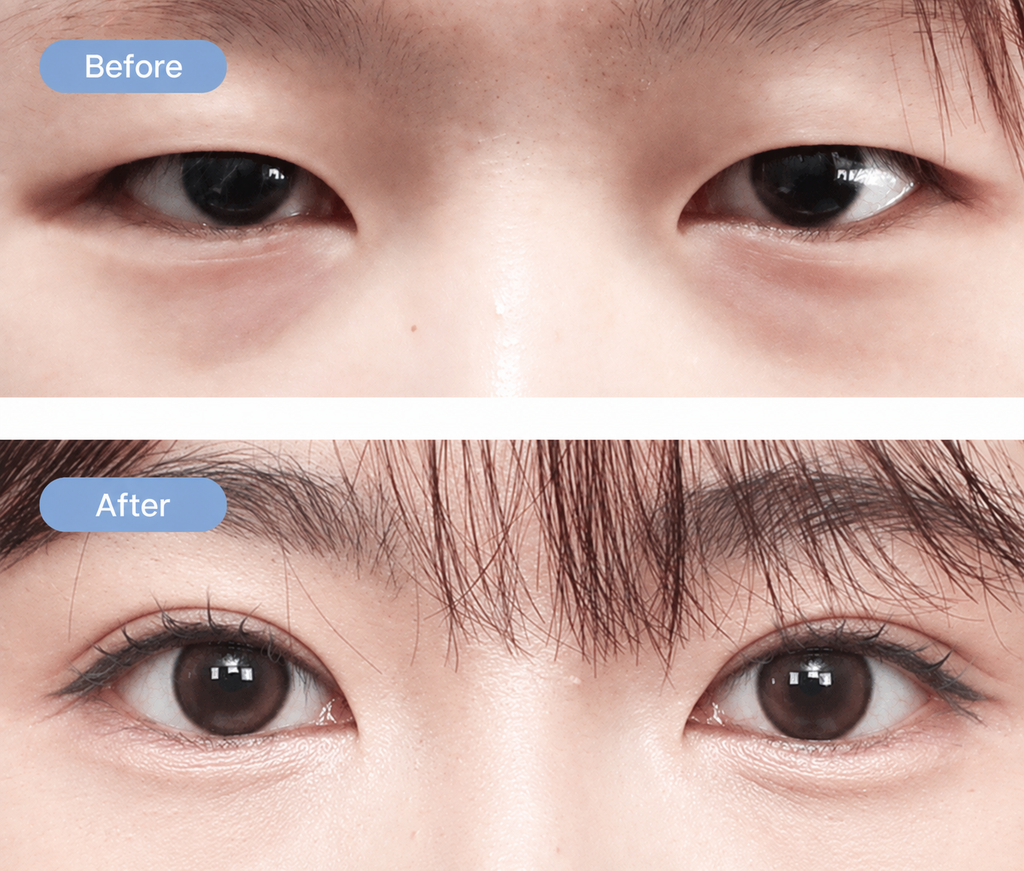
Do your eyes look tired, hollow, or older than you feel—even after a good night’s sleep?
As we age, the delicate area around our eyes can gradually lose volume. For some people, this creates a sunken appearance above the eyelids, making the eyes look deeper-set and the upper eyelid crease more noticeable.
If you have naturally thin upper eyelids or have developed hollow eyes over time, Upper Eyelid Fat Grafting in Busan may be an option worth exploring.
This procedure uses fat from your own body to restore volume to the upper eyelids, helping create a softer, more balanced appearance while preserving your natural eye shape.
At Haneul Plastic Surgery in Busan, South Korea, upper eyelid fat grafting is performed with an individualized approach based on each patient’s eyelid anatomy, degree of volume loss, and aesthetic goals.
In this guide, we’ll explain how upper eyelid fat grafting works, who may benefit from it, what recovery looks like, and what international patients should know before considering surgery.
- What Is Upper Eyelid Fat Grafting?
- Why Do Upper Eyelids Become Hollow or Sunken?
- Who Is a Good Candidate for Upper Eyelid Fat Grafting?
- How Is Upper Eyelid Fat Grafting Performed at Haneul Plastic Surgery?
- Upper Eyelid Fat Grafting in Busan: Surgery Time & Recovery
- How Long Does Upper Eyelid Fat Grafting Last?
- Why Choose Haneul Plastic Surgery for Upper Eyelid Fat Grafting in Busan?
- Upper Eyelid Fat Grafting in Busan: Frequently Asked Questions
What Is Upper Eyelid Fat Grafting?
Upper eyelid fat grafting, also called upper eyelid fat transfer, is a cosmetic procedure that restores volume to hollow or sunken upper eyelids using fat harvested from another area of the patient’s body.
The procedure is designed to address volume loss rather than excess eyelid skin.
The skin around the eyes is relatively thin, making changes in the underlying fat and tissue support more noticeable as we age.
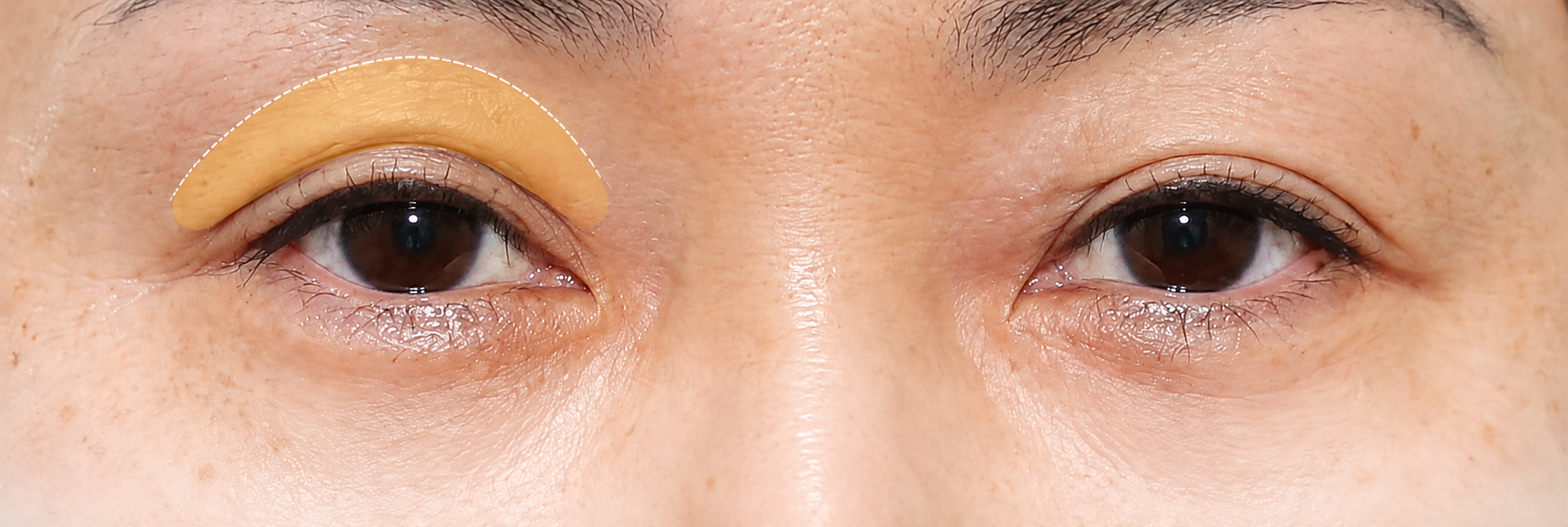
When upper eyelid volume decreases, the area between the eyebrow and eyelid crease may appear hollow or deeply recessed.
This can create several concerns:
- Hollow or sunken upper eyelids
- A tired or older-looking appearance
- Deep shadows above the eyelid crease
- More prominent brow bones
- Multiple or uneven-looking eyelid folds
By carefully placing small amounts of purified fat into areas of volume deficiency, upper eyelid fat grafting aims to restore a smoother transition between the brow and upper eyelid.
The goal is not to make the eyelids excessively full, but to create a natural-looking contour that complements the patient’s existing eye shape.

Why Do Upper Eyelids Become Hollow or Sunken?
Hollow upper eyelids can develop for several reasons, and not everyone experiences them as part of aging.
1. Age-Related Volume Loss
As we get older, changes in facial fat distribution and soft tissue support can make the upper eyelids appear more hollow.
Because the eyelid skin is particularly thin, these changes may become noticeable earlier than in other facial areas.
2. Naturally Thin Upper Eyelids
Some people naturally have less fat around their upper eyelids.
Even at a younger age, this can create a deeper-set appearance or make the upper eyelid crease look more pronounced.
However, thin eyelid skin alone does not necessarily mean that fat grafting is needed.
3. Prominent Brow Bones
When the brow bone is relatively prominent and the upper eyelid lacks volume, the contrast can make the eyes appear more deeply recessed.
In selected patients, restoring upper eyelid volume may help soften this contrast.
4. Previous Eyelid Surgery or Volume Changes
Some patients develop upper eyelid hollowing after previous eyelid surgery, particularly when excessive fat has been removed.
Significant weight changes or individual anatomical characteristics may also contribute to upper eyelid volume loss.
A plastic surgeon should assess the underlying cause before recommending fat grafting.
Who Is a Good Candidate for Upper Eyelid Fat Grafting?
Upper eyelid fat grafting may be considered for patients who want to improve hollow-looking upper eyelids without substantially changing their natural eye shape.
You may be a suitable candidate if:
1. You Have Hollow or Sunken Upper Eyelids
- The area above your eyelid crease appears noticeably recessed due to insufficient soft tissue volume.
2. Your Brow Bones Look More Prominent Because of Eyelid Hollowing
- A lack of upper eyelid volume creates a strong contrast between your brow bone and eyelid.
3. You Have Multiple or Deep Upper Eyelid Creases
- Volume loss may contribute to the appearance of multiple eyelid folds or an unstable-looking crease.
- However, fat grafting does not correct every cause of multiple eyelid creases.
4. You Want a Softer, More Youthful-Looking Eye Contour
- You would like to restore volume around your upper eyelids while maintaining your natural facial features.
Important: Upper eyelid fat grafting is not necessarily appropriate for patients whose main concern is drooping skin, true eyelid ptosis, or excess upper eyelid fat.
Those conditions may require different procedures, such as upper blepharoplasty or ptosis correction.
A consultation is necessary to determine whether volume restoration is the right approach.
How Is Upper Eyelid Fat Grafting Performed at Haneul Plastic Surgery?

At Haneul Plastic Surgery, the procedure involves harvesting and preparing the patient’s own fat before carefully transferring it into the hollow upper eyelid area.
Step 1. Fat Harvesting and Preparation
A small amount of fat is collected from a suitable donor area of the patient’s body.
The harvested material is processed to prepare fat for transplantation.
The surgeon determines the donor area and amount required based on the individual treatment plan.
Step 2. Personalized Upper Eyelid Design
The surgeon evaluates the patient’s eyelid anatomy and identifies areas where volume is lacking.
The hollow upper eyelid contour is marked to guide fat placement.
Careful planning is important because the upper eyelid is a delicate area where even small volume changes can affect the overall appearance.
Step 3. Precise Fat Transfer Using a Fine Cannula
Prepared fat is carefully transferred into the planned areas using a fine cannula.
The surgeon controls the placement and amount of fat to create a balanced upper eyelid contour.
Because the skin around the eyes is thin, precise placement is particularly important to reduce the risk of visible irregularities or excessive fullness.
Step 4. Natural-Looking Upper Eyelid Volume
The intended result is a smoother transition between the brow and eyelid, with less noticeable hollowing.
Some transferred fat may be reabsorbed during healing, so the final volume can differ from the immediate postoperative appearance.
The amount of fat that remains varies between patients.
Upper Eyelid Fat Grafting in Busan: Surgery Time & Recovery
Upper eyelid fat grafting is generally a relatively short procedure compared with more extensive eyelid surgery.
At Haneul Plastic Surgery, the clinic provides the following surgical information.
| Surgery Information | Haneul Plastic Surgery |
|---|---|
| Procedure | Upper Eyelid Fat Grafting |
| Surgery Time | Approximately 30 minutes |
| Anesthesia | Sedation |
| Hospitalization | Generally not required |
| Stitch Removal | Generally not required |
| Return to Light Activities | Approximately 1–2 days |
| Final Results | Develop gradually as swelling resolves and transferred fat stabilizes |
The information above reflects the clinic’s general procedure guidance. Individual recovery and treatment plans may vary.
How Long Does Swelling Last After Upper Eyelid Fat Grafting?
Although some patients can return to light daily activities within one or two days, this does not mean the eyelids will be fully healed.
Temporary swelling, bruising, tenderness, and uneven-looking fullness may occur after surgery.
Visible swelling may take several days to a few weeks to improve, while the transferred fat continues to settle over the following months.
Patients should avoid judging the final result immediately after surgery.
Your surgeon will provide individualized postoperative instructions based on your condition.
How Long Does Upper Eyelid Fat Grafting Last?
One of the main advantages of fat grafting is that it uses the patient’s own tissue rather than a temporary injectable filler.
After transplantation, some fat cells may establish a blood supply and remain in the treated area.
However, not all transferred fat survives.
A portion may be naturally reabsorbed during the healing process, which means the final volume may be less than the amount initially transferred.
Fat that successfully survives can provide long-lasting volume improvement, although results may change with aging, weight fluctuations, and individual biological factors.
Some patients may require additional fat grafting if the initial volume is insufficient or if noticeable asymmetry develops.
For this reason, upper eyelid fat grafting should not be described as a guaranteed permanent procedure.
Why Choose Haneul Plastic Surgery for Upper Eyelid Fat Grafting in Busan?
When considering fat grafting around the eyes, choosing a clinic with experience in eyelid anatomy and facial aesthetic surgery is important.
The upper eyelid is a delicate area, and excessive or uneven fat placement may create visible irregularities.
At Haneul Plastic Surgery in Busan, the surgical plan is developed according to the patient’s eyelid structure, degree of hollowing, and desired result.
Personalized Eye Surgery Consultation
The surgeon evaluates whether the patient’s concern is primarily related to volume loss, eyelid skin, muscle function, or another anatomical factor.
This helps determine whether upper eyelid fat grafting is appropriate or whether another eye surgery procedure should be considered.
Natural-Looking Volume Restoration
The goal of upper eyelid fat grafting is to improve hollowing while maintaining a balanced appearance.
Rather than simply adding as much volume as possible, treatment planning considers the relationship between the eyebrows, eyelid crease, and surrounding facial features.
Treatment Planning for International Patients
International patients considering Upper Eyelid Fat Grafting in Korea can contact Haneul Plastic Surgery before their visit.
By sharing their main concerns, preferred travel dates, and clear photographs, patients can receive preliminary information about the procedure and consultation arrangements.
A final recommendation requires an in-person assessment by the surgeon.
Upper Eyelid Fat Grafting in Busan: Frequently Asked Questions
Can upper eyelid fat grafting fix hollow or sunken eyes?
Upper eyelid fat grafting may improve hollow-looking upper eyelids when the main cause is insufficient soft tissue volume. However, not all sunken-looking eyes are caused by fat loss. A surgeon must evaluate your eyelid anatomy to determine whether fat grafting is appropriate.
Is upper eyelid fat grafting better than filler for hollow eyes?
Both fat grafting and hyaluronic acid fillers may be considered for selected volume-related concerns, but they have different benefits and risks. Fat grafting involves harvesting and transferring your own fat, while fillers do not require fat harvesting and are generally temporary. The upper eyelid is a delicate area, and either approach requires careful assessment because serious complications are possible.
Will the transferred fat disappear after surgery?
Some transferred fat is naturally reabsorbed during healing. Fat cells that successfully establish a blood supply may remain for years, but the amount of surviving fat varies. Additional treatment may be needed in some cases.
Can upper eyelid fat grafting fix multiple eyelid creases?
It may help when multiple eyelid folds are partly related to upper eyelid volume loss. However, multiple creases can also result from skin characteristics, previous surgery, or eyelid anatomy. Fat grafting alone may not correct every case.
Will upper eyelid fat grafting make my eyes look puffy?
Temporary puffiness is common during recovery. Excessive fat placement or uneven fat survival can also lead to unwanted fullness or contour irregularities. Careful surgical planning is important, but a natural-looking result cannot be guaranteed.
What are the risks of upper eyelid fat grafting?
Possible risks include swelling, bruising, infection, asymmetry, fat reabsorption, contour irregularities, persistent lumps, and dissatisfaction with the result. Rare but serious complications, including vascular injury and vision loss, have been reported with facial fat injection. Patients should discuss these risks with their surgeon before proceeding.
Can I get upper eyelid fat grafting during a short trip to Busan?
It may be possible, but your travel schedule should allow enough time for consultation, surgery, and any recommended follow-up assessment. Although light activities may be possible after one or two days, swelling and bruising can last longer. Confirm the recommended length of stay with the clinic before booking flights.
Considering Upper Eyelid Fat Grafting in Busan? Consult Haneul Plastic Surgery
Hollow upper eyelids can make your eyes appear tired, deeply recessed, or older than you feel.
If the concern is caused by upper eyelid volume loss, upper eyelid fat grafting may help restore a softer, more balanced eye contour.
At Haneul Plastic Surgery in Busan, the surgeon evaluates your eyelid anatomy and determines whether fat grafting or another eye surgery procedure is more appropriate.
International patients can request a preliminary consultation by sharing:
- Full name and nationality
- Main eyelid concerns
- Previous eyelid surgery or treatment history
- Preferred appointment date
- Clear front-facing and side-view photographs
The clinic can review your inquiry and provide preliminary information about the procedure, expected recovery, and appointment arrangements.
Contact Haneul Plastic Surgery to discuss whether upper eyelid fat grafting is suitable for your hollow or sunken upper eyelids.